
WOULD YOU DITCH YOUR SMARTPHONE FOR PHYSICAL MEDIA?
AN INTERVIEW WITH THE FOUNDER OF THE ‘PHYSICAL MEDIA MOVEMENT 2026’
WRITTEN BY OSCAR H. PHOTOS
Since its beginning, Hazy Magazine has continually promoted the importance of creating physical media, such as magazines and zines, as well as hosting live exhibitions and launch events to bring creatives together in person to interact.
Many independent creatives often struggle to showcase their work online or make a name for themselves when the social media algorithms often favour short-form content over a slow but steady creative flow. Of course, this doesn’t always match the pace or work input for some creative practices, where real time and patience is often required. This was the motivation behind Hazy Magazine to create a physical platform where creatives could showcase their talent from across the world, and take part in live exhibitions to showcase their work to an in-person audience. Alongside Hazy Magazine, there has been a noticeable resurgence in print media, particularly in the North-West, alongside print magazine shops such as UNITOM in Manchester thriving and supporting the print community.
With technology and AI rapidly progressing, some individuals, even outside the creative industry, are choosing to revert back to more basic forms of physical media or technology, testing whether life without a smartphone and social media is as doable in today’s society, and if there are any benefits to slowing down and taking a break from doom-scrolling on Instagram. But is a complete reversion possible for everyone in today’s society? Of course, one could argue that social media and phones actually make information and connectivity much more accessible for people across the world who may not have had this privilege before, not to mention the cost factor of buying new pieces of physical technology to replace a smartphone, and how easy it is to find older physical media these days to purchase. However, some have aimed to set themselves the challenge to see if it is really doable in today’s world.
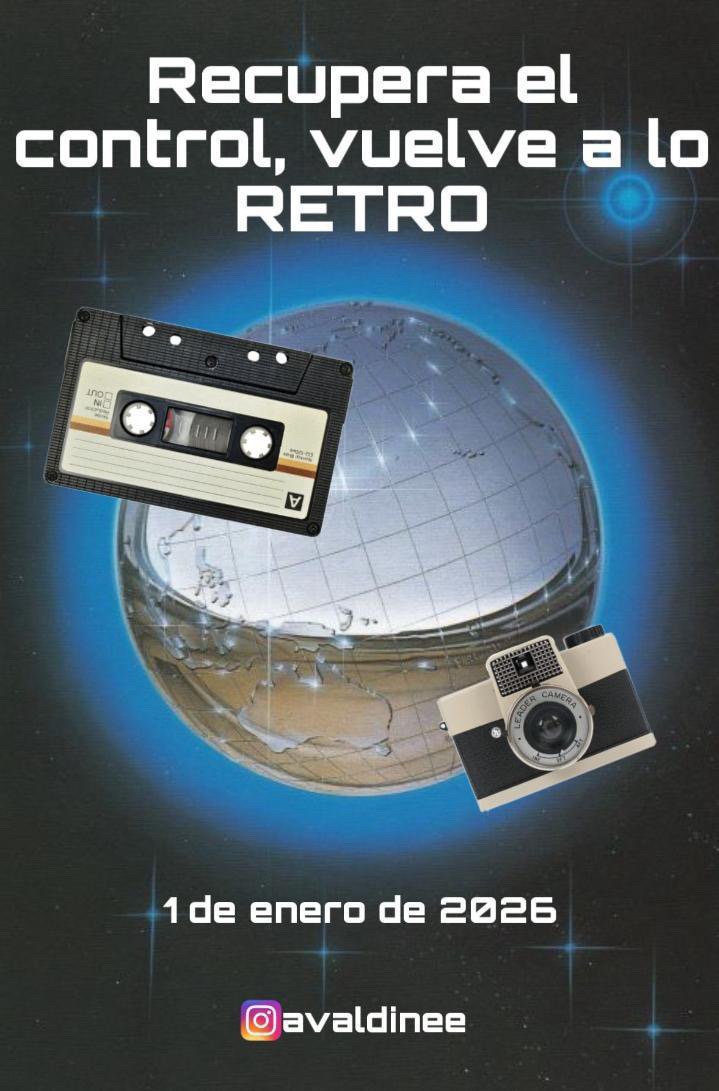
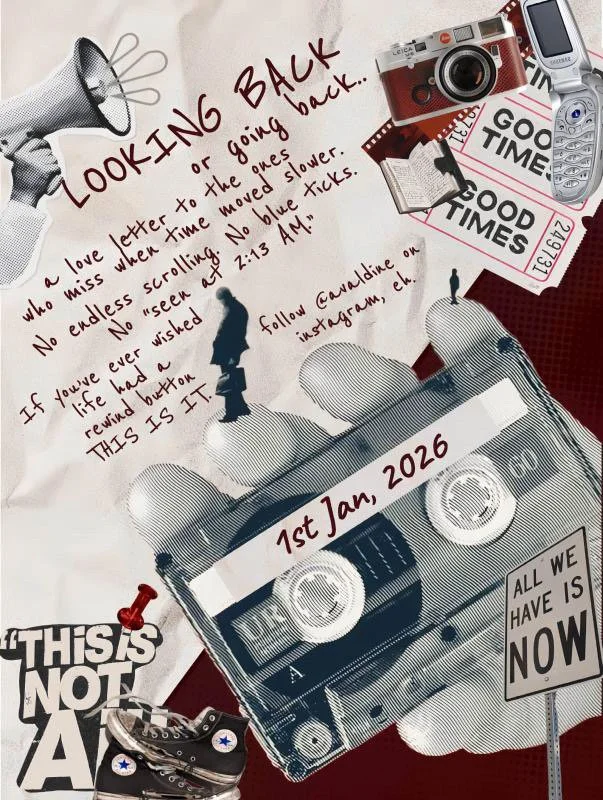
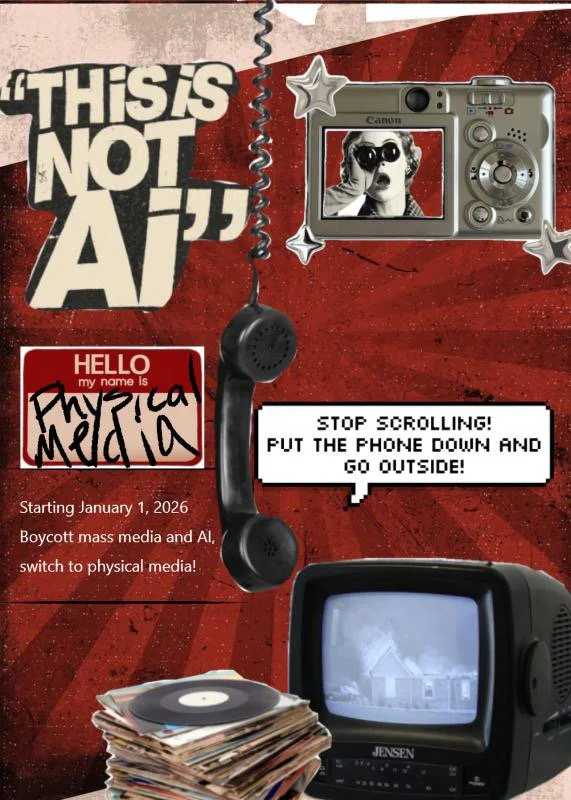
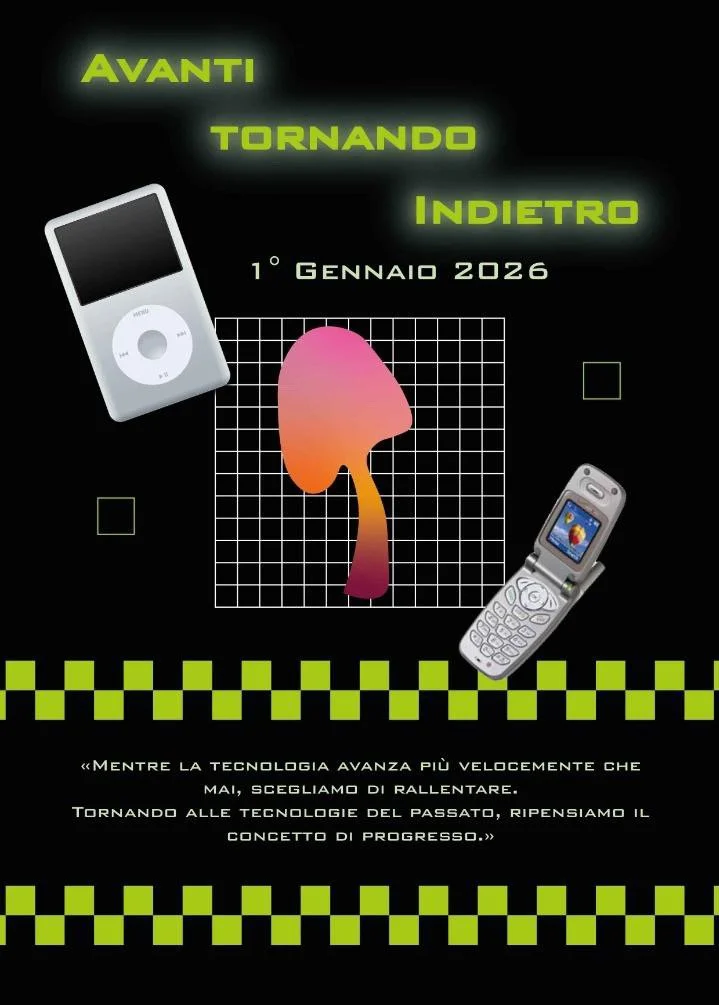
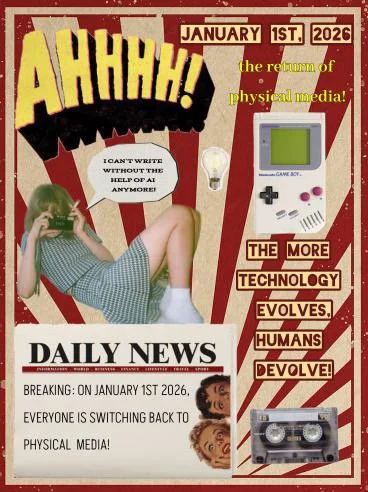
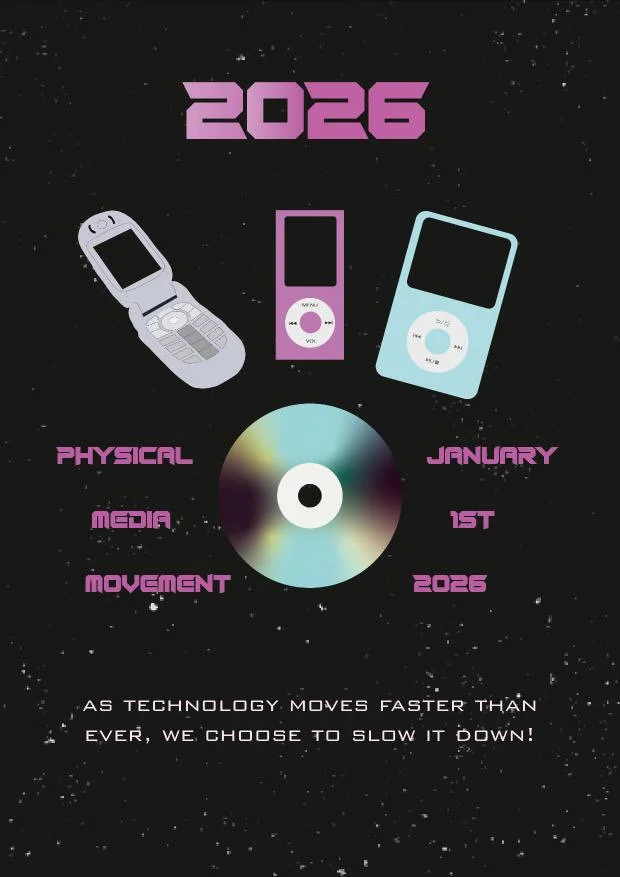
Promotional material Ava has used to promote the Physical Media Movement 2026. All images courtesy of Ava/ @avaldinee.
I recently spoke to Ava, a woman from the UK who founded the viral Physical Media Movement 2026. Coming into effect after January 1st 2026, Ava’s movement promotes a reversion back to physical media, ditching the smartphone and substituting it with DVD players, analogue cameras, CD players and other forms of more basic, retro technology. Ava claims her movement aims to benefit people, and after first launching, the movement went viral online, receiving thousands of views on Instagram and TikTok. Despite being the Physical Media Movement, social media was an inevitable tool for Ava to promote this movement, as it is with any of today’s campaigns or movements. Social media has become one of the main sources of spreading awareness to users across the world in the modern day about many topics. As I previously mentioned, it can be argued it has made information much more accessible to people who wouldn’t have been able to find out about the world as easily otherwise. Additionally, even though social media can be quite saturated, it brings light to events taking place across the world right to your phone screen within a few clicks.
Therefore, I decided to ask Ava about whether she thinks it is still possible to promote movements such as the Physical Media Movement without social media, why she started this movement, and the debate around whether cutting down on digital technology and reverting back to more basic technology would necessarily benefit everyone.
HAZY: Similar to what you are promoting, Hazy Magazine aims to promote connecting back to physical media in an increasingly digitalised society, with a focus in doing so within the creative industry. How do you see physical media as important in creative practices, such as photography, art or fashion, as opposed to showcasing creativity purely through digital platforms?
AVA: I think using physical media is important for creativity because it forces people to slow down, think more, and make something real with their hands, instead of just posting online or scrolling. It helps ideas stick and makes the creative process feel more meaningful.
HAZY: How do you hope the movement you are promoting, or connecting with more physical media/technology, will change people's behaviours or attitude towards creativity or socialising?
AVA: I hope it'll encourage people to start studying and writing more without the help of AI. People can argue that AI makes things easier when in reality, it makes people depend on it to do things they used to be able to do before. Instead of gaining new skills, they're losing ones they already had and they're missing out on finding new hobbies that might lead to a career path.
That being said, there are also other things I hope for, such as people going out more without needing to scroll or focus on their phones and hopefully, it'll help people embrace individuality again. Nowadays, people are too focused on fast trends and what they think other people will accept. Believe it or not, a lot of real life opinions form from social media and that's what made fashion and personality boring. Without such advanced technology, instead of focusing on what strangers across the world have to say about their interests or how they want to dress, they will have to focus on what they want and what the people who are actually around them are saying. Doing this can also encourage people to become more creative as instead of going back onto their phones, they're forced to find something fun to do. Like creating music, making art, photography and graphic design.
HAZY: Your movement has gone viral on social media, and despite being a movement promoting physical media, social media has been used as a tool to promote it. Do you believe this is often the case with trends/promoting things in today’s world, and do you think it would be harder to promote something like this with physical media without social media if someone was to?
AVA: Yes, I do think it’s often the case that trends or movements, even those promoting alternatives to digital culture, rely on social media at some stage. Social media acts as a high‑speed amplifier and it’s a tool for visibility, for quickly connecting people across countries, and for giving a movement a sense of legitimacy. Even if the ultimate goal is to reduce reliance on digital platforms, using them strategically at the start can help reach the audience who might then adopt the behaviour offline.
That said, I don’t believe it would be impossible to promote something like the Physical Media Movement without social media, though it would require more focused offline strategies. If a small group of committed individuals were putting up posters, spreading information through schools, distributing flyers in neighborhoods, encouraging word-of-mouth, and even creating visible public demonstrations of the behavior, the movement could still grow. Offline strategies tend to spread more slowly, but they often create deeper engagement because people experience the behaviour rather than just seeing it online.
In other words, social media accelerates reach and awareness, but offline actions and especially ones that are tangible, visual, and social are what make the movement real and enduring. Even if someone started the movement purely through physical methods, word would eventually travel online anyway because people naturally share noteworthy things they encounter in the real world.
HAZY: If more individuals 'connect to the physical', as Hazy Magazine promotes in its ethos, this can have a positive impact on people's outlook on life, social life and creativity. How do you believe larger institutions or companies could also implement this ethos to benefit creative industries from the top down, such as in music, art, graphic design, the performing arts etc?
AVA: I think large companies could actually start re-selling what they encourage. Instead of telling people to just log-off, actually putting them out and explaining why it's happening and why it's good for people would actually help others understand better and support the idea more.
HAZY: What has been the response to your movement so far? Do you believe people will be able to adapt to not using smartphones as easily as you would hope?
AVA: Well, it hasn't been all sunshine and rainbows but it's getting somewhere. People all around the world from various continents are now talking about it too so I believe something is being done right. However, to adapt to not using smartphones, I don't think it will be easy. Of course, easier for others than some but to abandon something you've grown addicted to takes time. I honestly believe it'll take a while and 2026 is just the beginning. However, if this all goes as planned, 2030 is looking great!
It is clear that there has been a resurgence in people using physical media, both in and outside creative practices, as a means of both disconnecting from the fast-paced digital world and growth in AI use that surrounds us and engaging with something more tangible. Will 2026 and Ava’s Physical Media Movement see a reversion back to simpler ways of communicating, consuming music and creativity? Will one movement be enough to convince people to ditch their smartphones for more basic media? Will it be accessible for everybody to participate in this movement? Has our use of technology and how we consume creativity, information and each other’s lives changed beyond relying on physical media? Only time will tell, but it is always worth trying to connect to the physical if you can, whether you are a creative or not, even in small ways.
Thank you to Ava from the Physical Media Movement 2026 for taking part in this interview.