
STYLIST VINCENZO TIGGIANO ON LIVERPOOL FASHION & CHAMPIONING THE CITY’S MUSIC SCENE
WRITTEN BY WILL MONHAM
‘I’m Vinny. That’s the alias’.
‘It’s short for Little Vinny, like Tidgy Vincent, which is just short for vintage.’
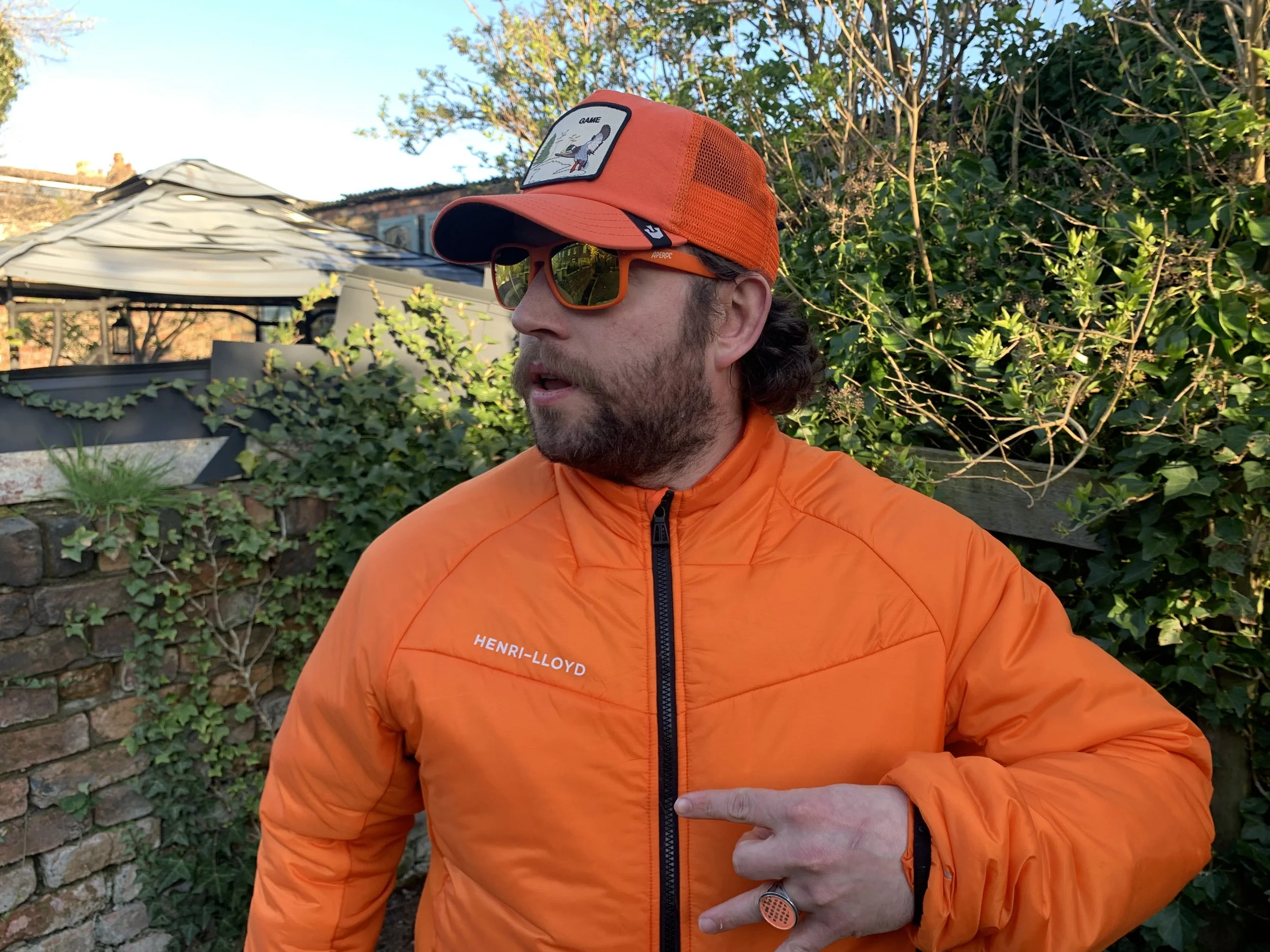
Vincenzo Tiggiano decked out in Henri-Lloyd during the interview in Liverpool.
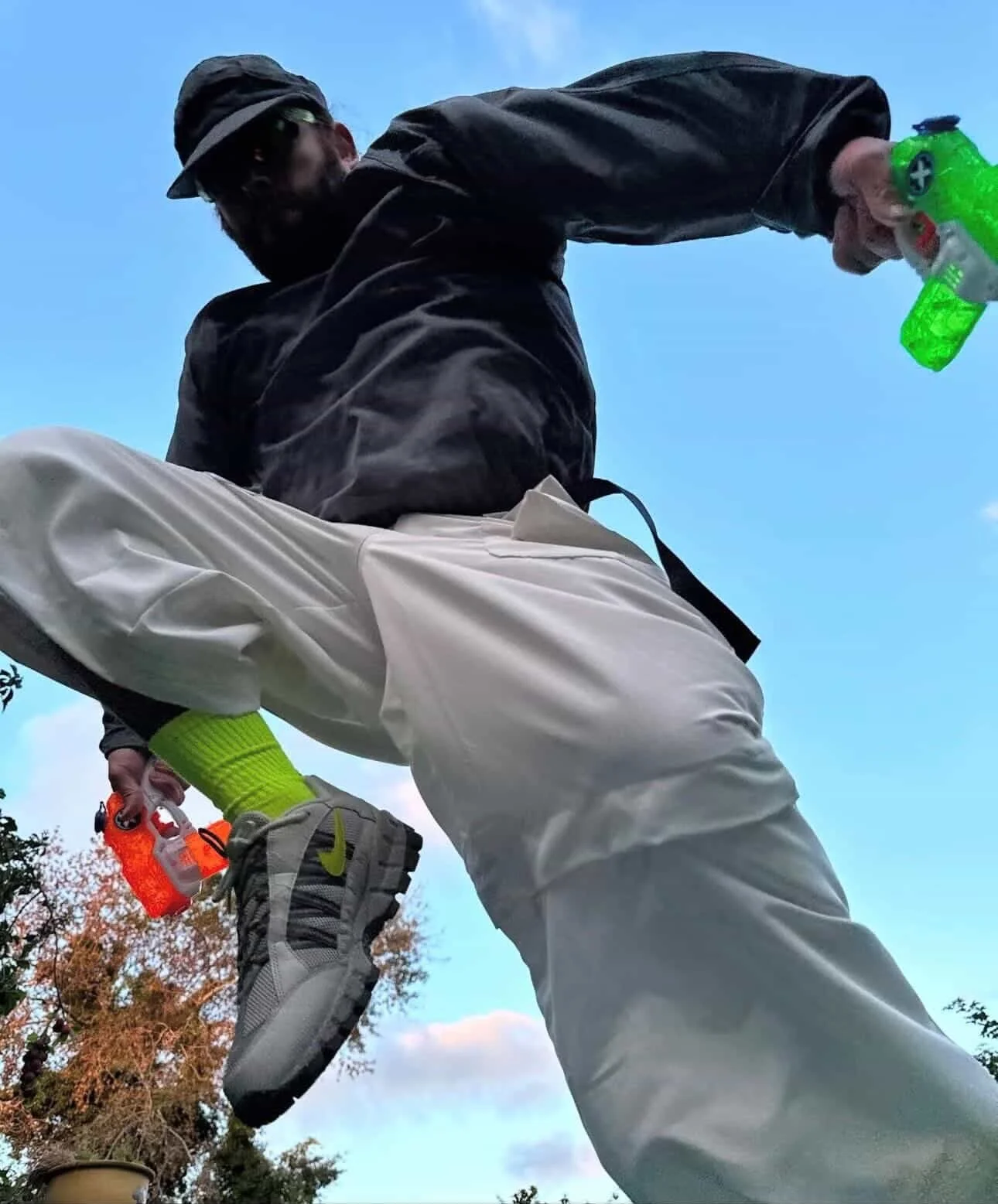
Liverpool based stylist and multimedia artist Vincenzo Tiggiano sits back on a seat in his house, a stone’s throw from the city centre. His continued efforts to promote everything fashion, from the history of brands to notable subcultures online have led him to become a professional stylist - dressing artists based in Liverpool and beyond; from G-Unit, to pop-punk icons Alien Ant Farm.
‘I was selling vintage clothes, and then I was doing personal shopping, and then I was painting clothes and selling those, and then eventually I started to get some professional work dressing artists and doing consultancy for brands.’
Tiggiano connects regularly with followers on his Instagram page, posting updates from the fashion world and collaborating with a multitude of labels.
‘It's holistic, in that I just try to educate people on fashion, and how it fits to them, and what self-expression is through fashion and art.’
‘Power to the people, always,’ he adds.
WILL: So where did fashion is the form of self-expression take route for you?
He takes a sip from a bottle of water as he considers the question.
VINCENZO: ‘A lot of people talk about it as though it's like, armour or it's costume.’
‘I think it really started when you realise how other people react to what you're wearing. You have this feeling of having some kind of an identity. And I think, for the negative and the positive, it really interested me.’
‘I think I figured out quite quickly that in Liverpool, and in my neighbourhood and in school, people take it very seriously how you dress, and that was interesting to me because I didn't really understand why that was so important to people.’
‘Quite quickly, I realised that there was a lot of uniforms. It wasn't just school - there were clothes that you had to wear to go to the gym, there was clothes that you wore to go on holiday, there were clothes that scallies in the area were supposed to wear - that was a form of uniform.’
‘You start off by posing’, he laughs, ‘and then you learn about the culture attached to the style.’
It becomes clear by our conversation that growing up Vincenzo took influence from myriad cultural sources, routed in a love of music, especially hip-hop.
‘It's mad, because the reason that The Game was wearing Dickies, is because people like Snoop Dogg, way before them, were wearing Dickies. And so that's why I wore Dickies.’
‘But the reason Snoop Dogg wore them is because there was a culture in LA of affordable hardware and work-wear pants’.
‘There's a work-wear influence, (they) usually come from quite similar utilitarian places: affordability, last-ability, quality, and then they find their ways into cultures.’
‘I think as well, queer culture is as much of an influence as black and hip hop culture. People used to say metrosexual, when a man who takes care of himself. It felt really mad back then, but now most men take care of themselves.’
‘Kids that I knew who were queer kids - when I was a teenager - they would have this like sense of style and I remember thinking to myself like, “I wonder if I could like wear a cardigan?” You couldn't do that, you know what I mean? There was a homophobic rhetoric.’
‘I think I basically tried a version of every style in the early days.’
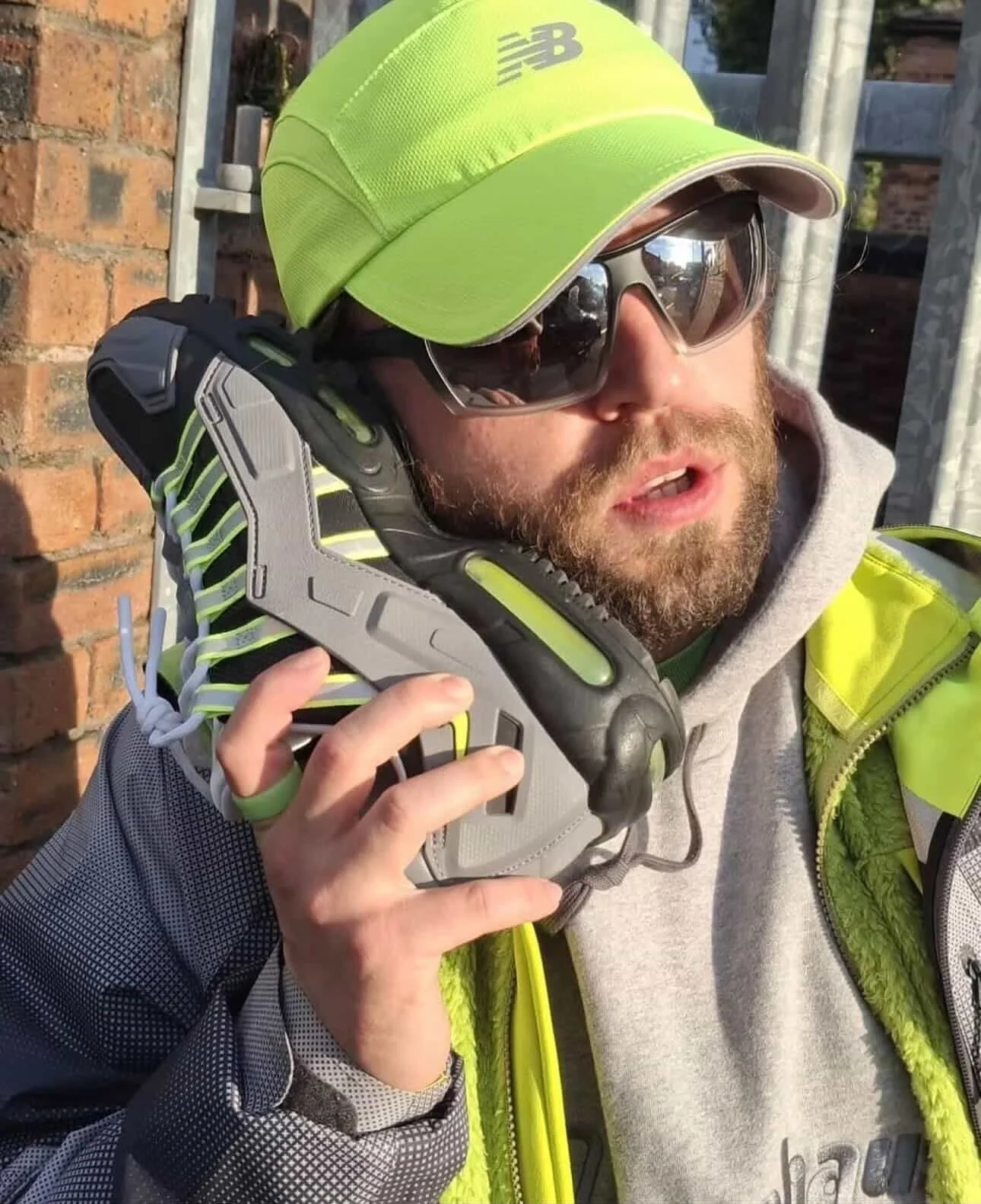
“Let's go”, and she just took me.
‘The format that I use now, we basically created that there.’
‘Every Wednesday I would drop some science or knowledge on different work-wear; heritages and histories from a (brand like) Dickies, or “how denim got popular”, or monkey boots and their history and that got me my first paid gig - Liverpool F.C retail got in touch. ‘
‘I did a bit of modelling for them and they paid me. I was on the side of Anfield, blown up, massive, and on the side of the shop.’
‘I’ve got a mate who was in Asia somewhere, and they must have an L.F.C shop in the airport, and like my face was on the side of the glass!’
‘I did have like a bit of a following in the city anyway from working in bars and jumping up on an M.C, and doing graffiti and getting into trouble, you know what I mean? Helping people out,’ he continues, ‘but what I actually did, no one really knew.’
It was after handling the social media for the iconic Liverpool outdoor clothing shop, Adapt Outdoors that Vinny met fast-growing Liverpool-rapper KOJ.
WILL: Describe your journey to collaborating with musicians and clothing brands
VINCENZO: ‘My mrs - who's @theweirdotarot, by the way - she had better stuff than I was doing at the time; hand dying garments and then creating illustrative artwork, printing this stuff onto clothes and selling them.’
‘In COVID I did the ‘Adidas tracky bottoms’ cast, which was a video once a week, where I'd put on a full outfit with a different pair of Adidas tracksuit bottoms.’
‘It was just something to do in COVID, when we got together.’
‘I was getting a bit more traction on the personal (Instagram) accounts. When we met, we bonded over fashion and creativity.’
At the time, my dream was to shoot content outside the Carhartt shop in Manchester, and make videos in the shop explaining some of the history of Carhartt.’
‘She had a camper van at the time. It wouldn’t have been possible if she hadn’t the impetus. It wouldn’t have been achievable.’
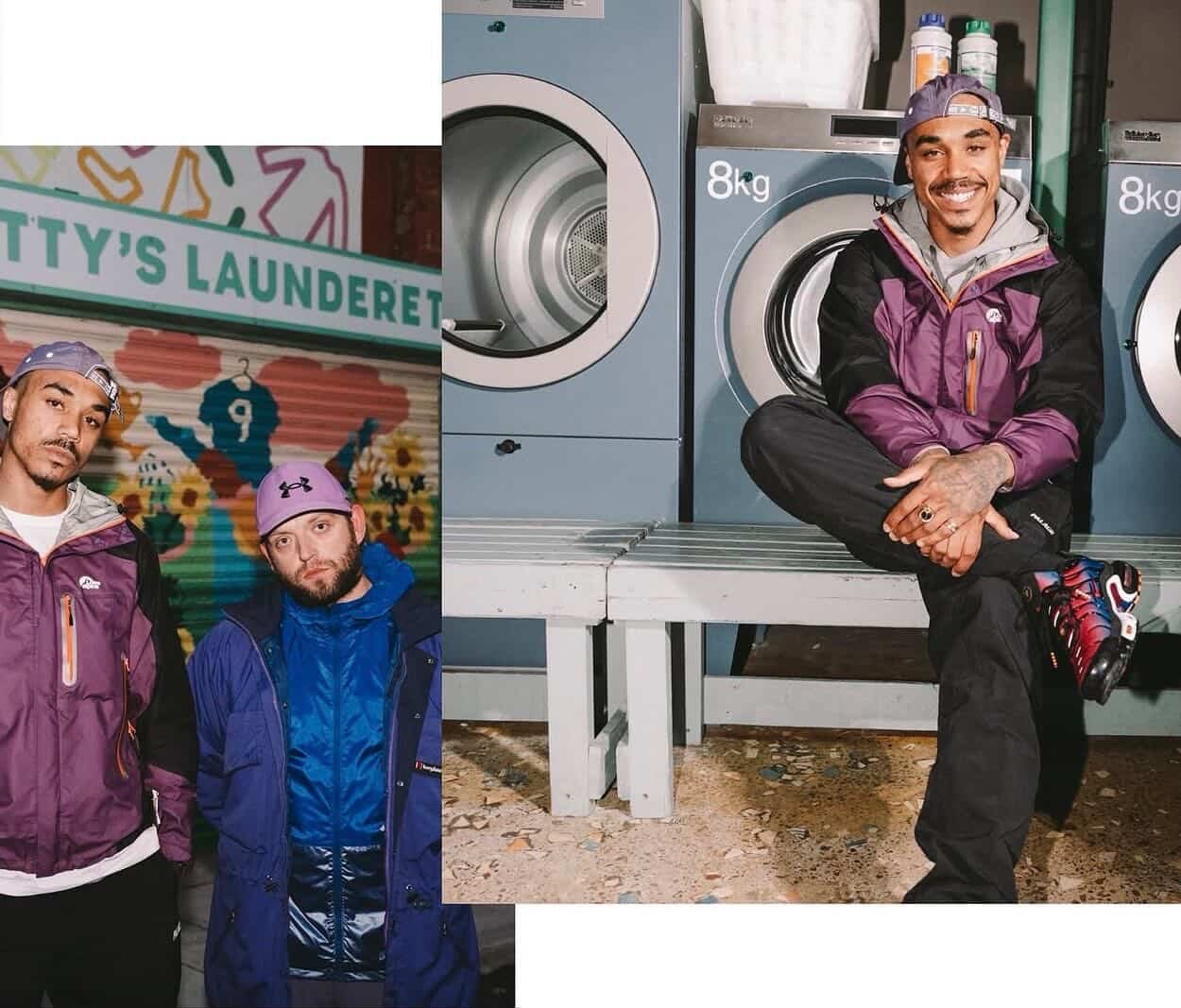
Rapper KOJ and Vinnie at Kitty’s Laundrette for Liverpool music city shoot (left) and KOJ in the Lowe Alpine x Stussy gore-tex from KarlosKago and PATTA x Nike x F.C. Barcelona T.Ns (right).
VINCENZO: We grew ‘Adapt’s social media from like 4,000 to 26,000 in less than six months.’
‘KOJ was looking at a jacket. It was a yellow Arcteryx Jacket. I was like, “buy it”, and he was like “nah, I don't think I'd wear that. I'd probably wear it in a music video.”’
‘Then it sold, and he saw there was another jacket that came in, and it was a Keela Munro - a very famous outdoor heritage jacket - in yellow as well’
‘He tried it on, and I had this yellow ACG cap and, I was like “if you buy that coat, I'll give you the cap”.
‘And then after that I was KOJ’s stylist!’
In addition to styling, Vincenzo Tiggiano was also a regular seller at markets around the city, eventually building a name for himself as a personal shopper.
‘In styling, you try and leave it up to them, but you also you know maybe get them to think a bit more critically.’
‘Personal shopping is different because there's a budget.’
‘For example, if you were like, “I need some new clothes”, that's one thing. But then if you were like, “I’m starting a new job, and I need clothes for work”, then there'd be something that we had work to.’
It was shortly after meeting KOJ that Vinny began to have a hand in style direction for music videos.
‘We had a brief, so I sent in some reference imagery of some old, more grimy New York shoots. I remember we used a baseball bat in the shoot.’
‘We dressed him head to toe in green and this quite loose fitting, but still (in) 110s.’
‘So then it's like, “right, now we're going to do another music video, so where do we take it now?” And then we’d have another chat and like what we wanted to reference: “here’s the base, now what's next?”’
Vinny describes the process of development in creating KOJ’s next music video - LOVE MONEY DRUGS - whose visuals and concept were guided by Latoya Reisner (@toyx).
‘The Love Money Drugs music video is a 1940s gangster aesthetic, so we had this old vintage car.
‘We shot that at Ancoats in Manchester and in the Gotham Hotel. So, as opposed to a cool jumper with Slick Rick on, we sourced an Italian linen suit.’
‘It was basically the mafia aesthetic, as we understand it in media - the powerful, African American portrayals of that - films like Hoodlum, American Gangster; a version of it that is more authentic to how KOJ would actually dress.’
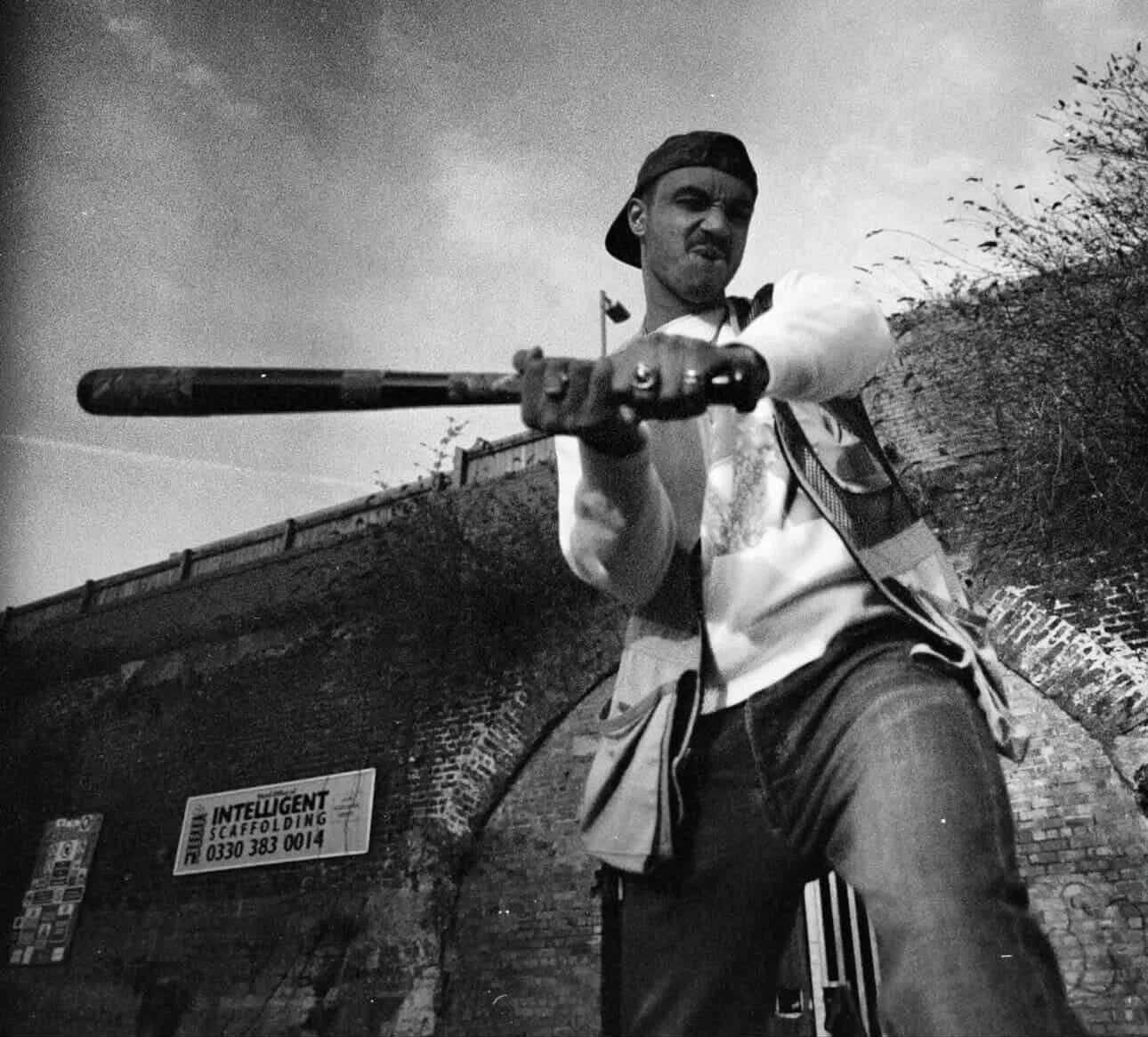
KOJ in Slick Rick Uniqlo jumper, vintage Remington shooting vest, Levis 501 jeans and Real Tree camo baseball bat for ‘A Reminder’ music video shoot.
‘You don't want him to be in a costume. You don't want him to look like “I’m from Chicago”. You want it to still have this hip-hop influence and have this relevant influence.’
‘It's something that you could see him in - he wore that suit to my mum's wedding!’
We hammed it up on the day, you know suspenders and brogues. That was cool. Everyone should go check out the Love Money Drugs music video.’
Anyone who spends time in Liverpool will immediately notice the abundant display of Scousers decked out in outdoor, tech-wear apparel. Having recently spent some time in Norway and noticing similar fashion influences, I am curious to know how this style became so emblematic of the city.
He considers the question for a moment: ‘It's similar to what I was saying about hip-hop. We are influenced by Scandinavian countries. Us and Scandinavians have similar influences, that's why we'll end up dressing the same.’
‘It's to do with scousers travelling. There's a diaspora of scousers all over the world.’
‘This is we're getting a bit theoretical: sailing and maritime lore has always been a big part of Liverpool's history and culture. A lot of Scousers worked their way on ships. If you were wearing like a duffle coat or a parka in Liverpool, that was the style at the time’.
‘If someone comes back on a ship from somewhere in Scandinavia, or in Europe, with a rubber Neoprene Helly Hansen coat on - your most technical jacket, it looked a bit weird; they were bright colours.’
‘You would have had some people who were like “no, I wouldn't wear that”, but when you see what it could do, the way rain would just roll off it - your arl Parker feels like a bit obsolete!’
‘Then that kind of ‘one-upsmanship’, and ‘keeping up with the Jones’s’, and the way (Liverpudlians) travel - that's had a huge knock on effect’
‘It becomes “I’ve got on the best coat”. You know what I mean? “This is the best coat.”
‘That's the thing with 110s as well. The reason they got so popular is because they were the most expensive. It wasn't even showing off how much money you had, it was just having the pinnacle of something.’
Throughout our exchange, a large canvas displaying an abstract painting is staring back at me. Eager to learn more about his artistic background and thoughts around physical media, I turn our conversation to the piece.
Vinny tells me that a year living in Barcelona reignited a passion for painting he had not seen since his childhood.
‘It’s a bit of a cliche, but by the time I'd been living in Barcelona for six months, I was painting walls, and painting clothes, and painting the ground every day.’
‘I moved quite quickly to right outside Segrada Familia, in basically the worst hostel in Barcelona. So it meant that I was in this really cool area where everyone comes from all over the world to visit, and I could see Segrada Familia from my window.’
It was during this time volunteering and surrounding himself with skaters and artists from Barcelona and worldwide that he threw himself back into his art.
‘Symbolism is - how I understand it - there's elements of it that are used for adverting. The one you'll know is Chat Noir; the cat’s tail subverts the boundary of the image.’
‘I was like, “right, I need to establish rules or boundaries to frame what I'm doing and then I need to break those boundaries when it's time.”
‘There’d be none of the work today, without that year in Barcelona.’
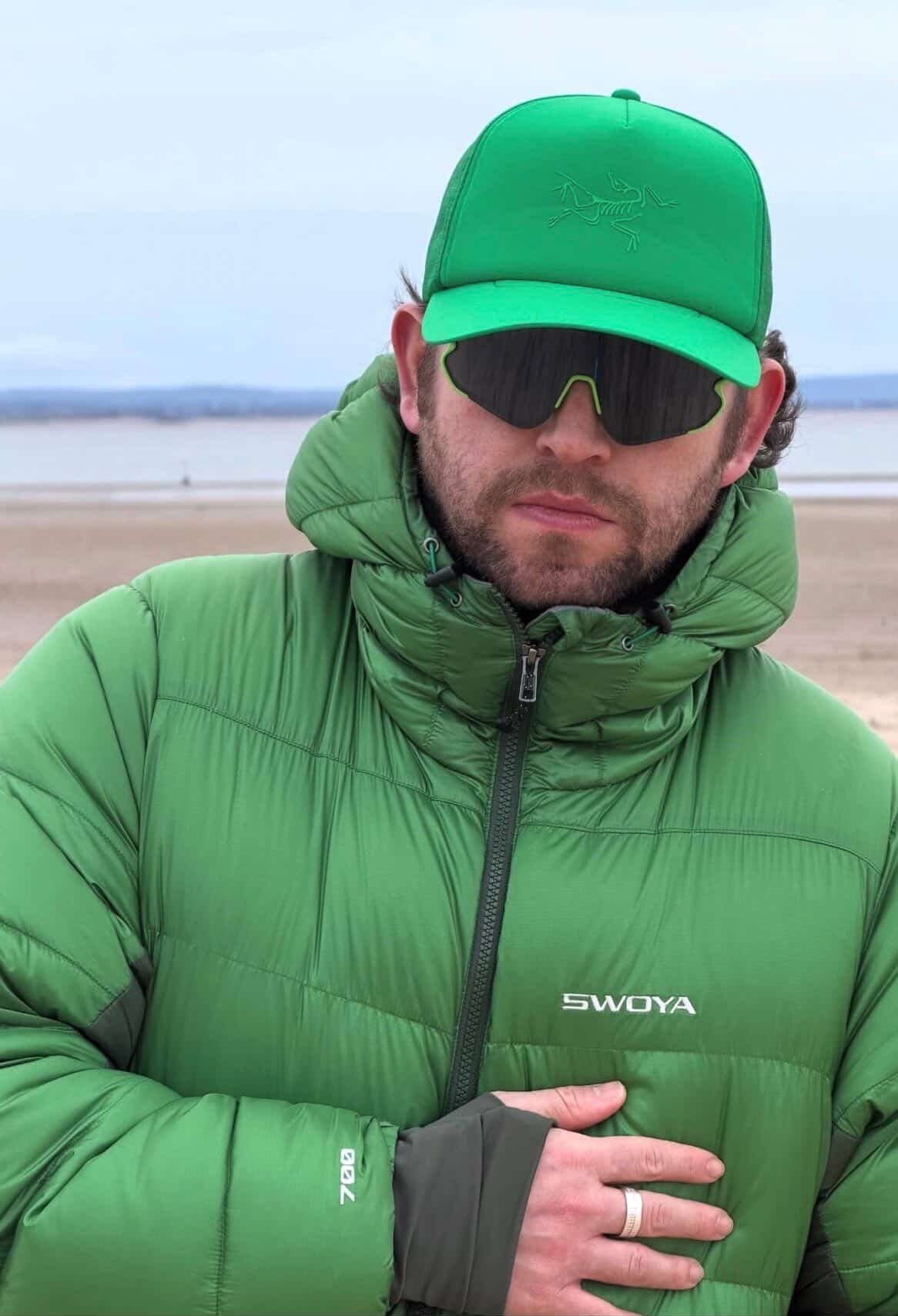
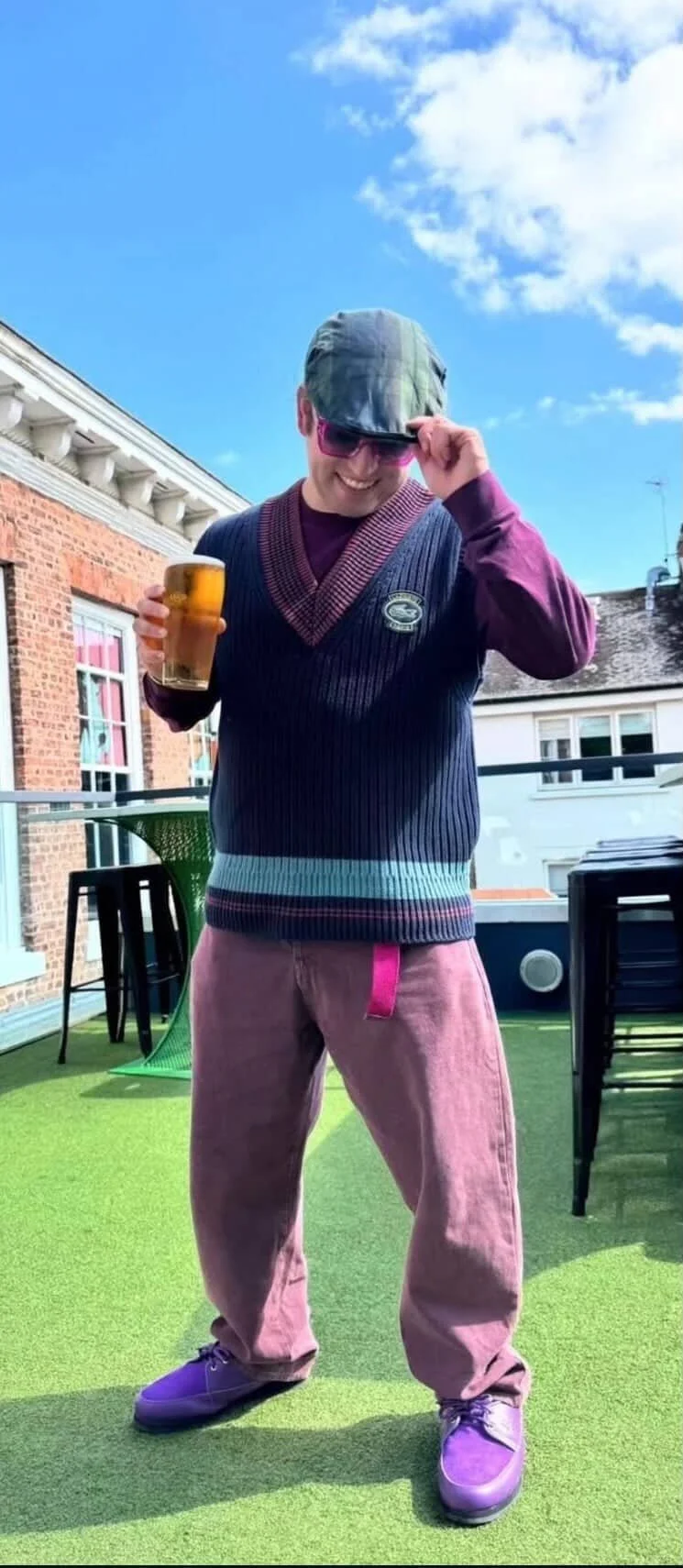
“we are influenced by Scandinavian countries. Us and Scandinavians have similar influences, that's why we'll end up dressing the same. It's to do with scousers travelling. There's a diaspora of scousers all over the world.”
WILL: A lot of zines in the North West make a point of promoting physical media. How do you feel about this form of art?
VINCENZO: ‘With Instagram, I have to act up to what the algorithm wants, so people see stuff, and basically print media means that you're making stuff for the people that want to read it. Everybody can read it. It's powerful.’
‘You can think that it’s gone away, because contemporary technology is faster or quicker. It's actually less grounded, and it's more transient, whereas you can have an issue of Hazy Magazine and one day your kid could read that!’
‘If you read something yourself, it can spark something in there that goes “I should read more stuff like this”, and I think the phone doesn't do that. It's not as aspirational.’
‘If you sit down with a magazine, you're just doing that. You're having this visceral experience. I think people are going to move back towards it. I think there's always swings and roundabouts with these things.’
‘To bring it back to fashion - wear whatever you want, honestly, I haven’t a problem with it, but what is annoying; if you want to dress like a lumberjack and you're not a lumberjack, or you want to dress like a cowboy, go for it!’
‘But then what ends up happening, is people aren’t dressing like a lumberjack, they're dressing like people who dress like a lumberjack, so then you're getting this bastardisation - it goes down, and down, and down.’
‘You're so far away from that original thing. That is what a lot of my platform is, going, ‘you're into this Western style?’ This is where it comes from, this is how this technology works.’
‘It's not fast fashion - there's a reason it's expensive, and a lot of people just don't have that knowledge because they don't need it, because their experience of fashion is ‘buy clothes to wear, take pictures of their clothes.’
‘If you have a bit more thought behind it, and you're a bit more conscious, then you will experience more empowerment in self-expression, because you're not just a carbon copy of someone else.’
You can keep up to date with Vincenzo’s work through his social media: