
IN CONVERSATION WITH NIKKI BLAZE & TONY BROKE
WRITTEN BY OSCAR H. PHOTOS & WILL MONHAM (WSDMON)
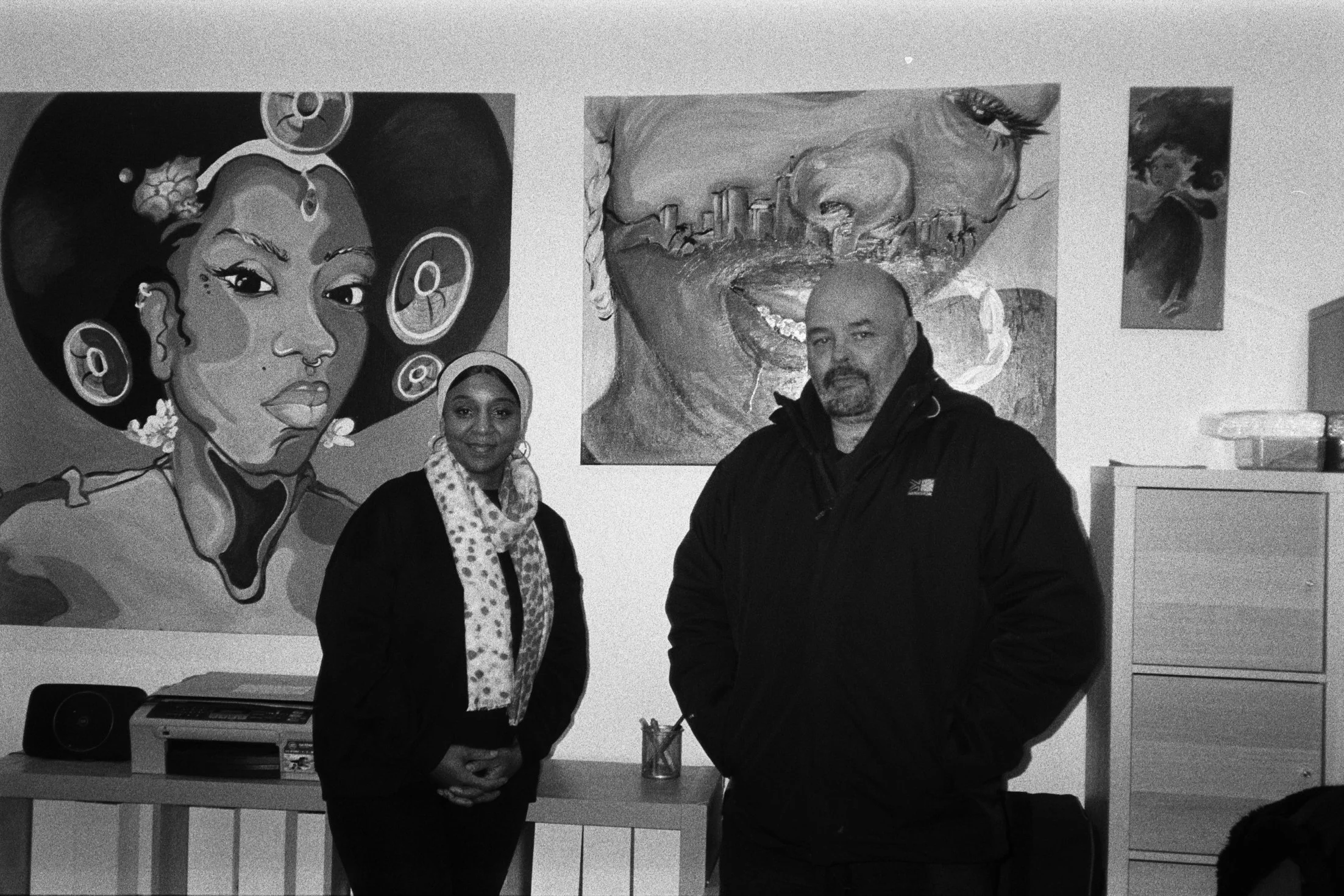
Nikki Blaze & Tony Broke in Toxteth TV. Photographed by Oscar H. Photos.
On a cold Tuesday night, we were welcomed into Toxteth TV’s headquarters by Nikki Blaze, a multidisciplinary artist with a rich career in fine art, broadcasting and, chiefly, hip-hop: “I was the first female artist to go international” she told us as we sat down in the head office of Toxteth TV for the interview.
Nikki Blaze, Tony Broke and DJ Ola Bean are international hip-hop artists, spending evenings at Toxteth TV focussing their efforts on mentoring the next generation of hip-hop artists in Liverpool. They work from a spacious and colourful office at the front of the building.
We were surrounded by creativity upon entering the office; the walls were decked with artwork and music; its many shelves stacked with records; Aretha Franklin, Bowie, Miles Davis, the rest covered with Nikki’s artwork; violins splashed in paint, expressionist portraits, life drawings.
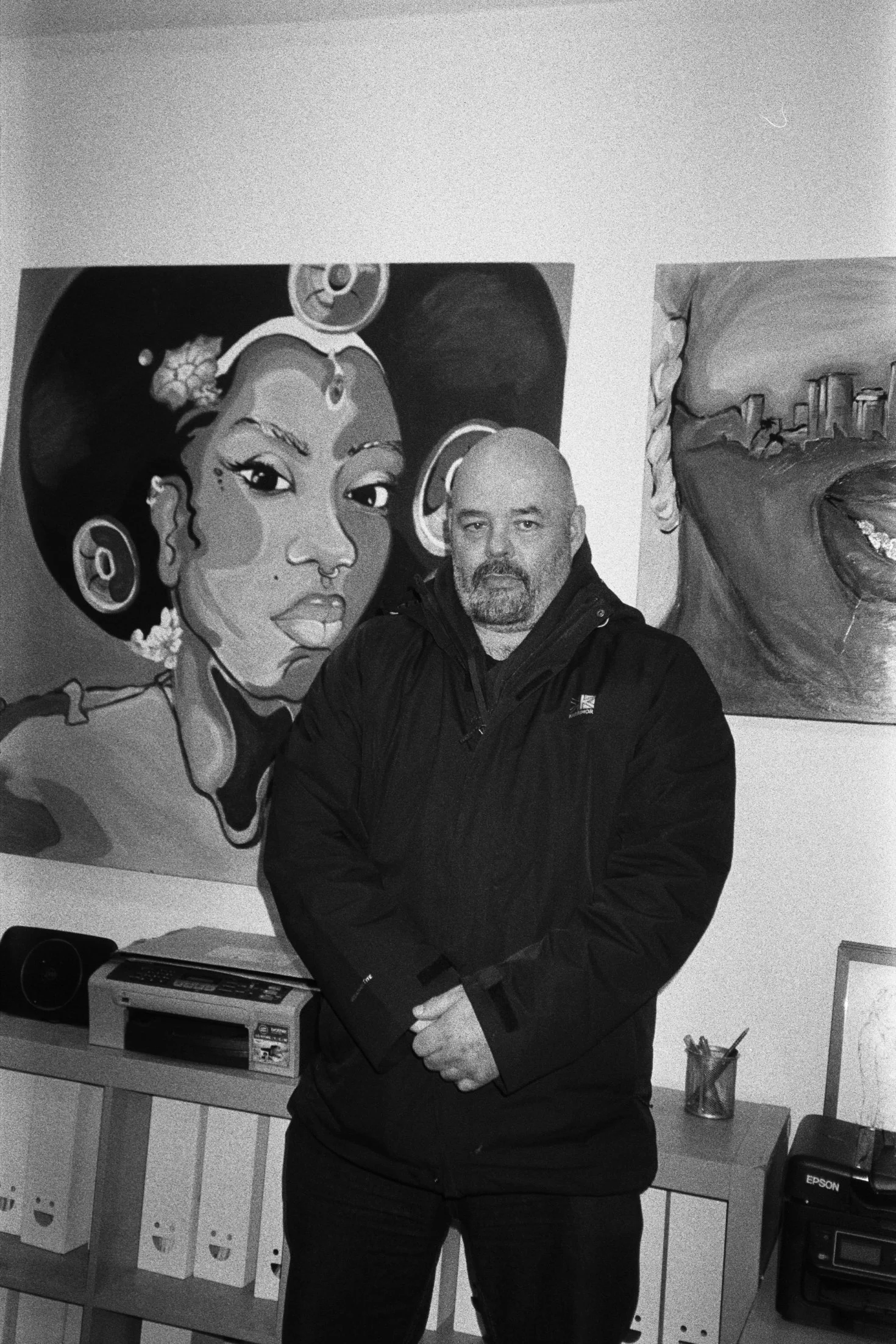
We were soon greeted by Tony Broke, a Liverpool-based rapper who gained notoriety from his time in the group Cult of the Damned. He introduced himself: “Tough TL, a.k.a Tony Broke. I grew up with hip hop in the in the late 70s, early 80s. I also grew up with B-Boy culture and then I’ve just been involved in hip hop ever since.”
After a brief tour of the building’s basement, in which work on several recording and rehearsal studios appeared to be in full swing, we returned to the office.
“We run a company called Liverpool Hip Hop Festival’, Nikki said, further stating that “all this time that Liverpool’s had a history in hip-hop, there’s never been a Liverpool company that’s catered for hip-hop.”
WILL: Talk to us about your influences. What you were listening to growing up?
NIKKI: “I’m an 80s baby, and my influence actually came from my mum. My mum was a hip-hop fan. She and her friends were listening to KRS One, Sugar Hill Gang, all that stuff. She was the first to give me my LL Cool J album and introduced me to Queen Latifah and all those people.”
She smiled for a moment: “As I got a little bit older, I became like a NWA fan, and Ice T had come out with Cop Killer and stuff.”
“I was really heavily into that music and she’d come into my bedroom and say, “turn that off, I don’t like the language!” But she’d be singing White Lines’ around the house. It made no sense!” Nikki laughed.
“We had the generational conflict when it came to hip hop, but it was all love at the end of the day.”
Nikki went on to describe the benchmark moment of her early career; meeting Tony Broke: ”I was about 15 at the time. I was with a friend - we were rapping and beatboxing at the bus stop and TL was standing there with his girlfriend and noticed that we were rapping. He was like, “beatbox and I’ll do a rap for you”.That’s how we became friends!”
HAZY MAGAZINE: So that shared love of hip-hop really brought you together.
“Totally”, replied the pair, in unison.
After some time spent in separate groups, the pair would record together later. Nikki explained: “We were all summoned by someone we knew to Pinball Studios - which doesn’t exist anymore.Some of the stuff there was donated from The Who!”
“Oasis - before they were known - used to come down to perform here!” added Tony.
“We were part of a crew called The Elite. There was about 18 of us”, Nikki continues. “I’d say I was the main female in The Elite.”
“We got to travel internationally and also do individual stuff with international artists. So yeah, it’s been quite a long journey and we’re still going!”
We then turned to Tony Broke who described that “as young lads, it was football and boxing, so I did both. But as soon as the TR 808 and the electronic sounds came out, it totally gripped a lot of kids, because it wasn’t the normal live drum kits and live instruments, it was electronic, synths, dance music, everything.”
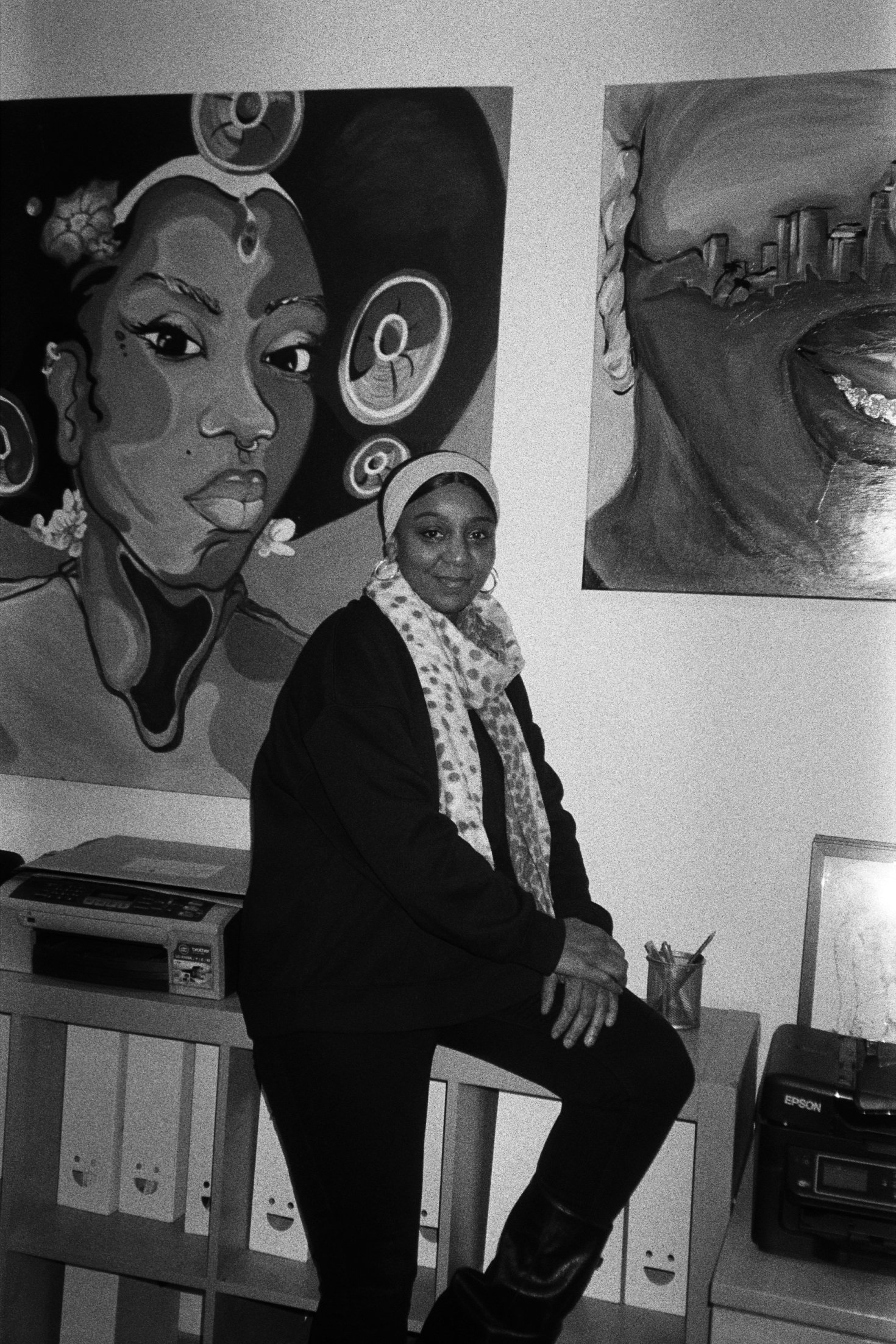
Nikki Blaze in front of some of her artwork in the office at Toxteth TV. Photographed by Oscar H. Photos.
Tony Broke in the Toxteth TV office. Both a solo rapper and member of infamous North-West rap group Cult of the Damned.
“It pulled a lot of people together. Liverpool is a divided city - a lot of racism in predominantly white areas - but hip-hop would bring people from communities together, and it broke a lot of barriers down and it built friendships.”
“It impacted on my life to the point where I’ve come out of school with no ‘quals, always fighting, going nowhere fast! But it kept me focussed.”
Tony continued: “I tried the B-Boy. When that fizzled out, I got into the rapping and beatboxing and stuff like that. And I had a chance to be with a few different crews.”
“So I’ve been in one crew - Order in Chaos. After that, I joined a live hip hop band - like the Roots. Then I met Lee Scott, who put them on Ashley and Rose Gills, Lee Scott and Sar anti heroes. They did a set on our night, then I became friends with them and then I joined their crew. The rest was history - Children of the Damned, Cult of the Damned, Blah records.”
“As time went on, we saw the possibility of how you could reach the young people, so I started doing workshops - Nikki did workshops as well - getting the next generation into rapping, or telling them about hip-hop history, and the positivity of hip-hop culture.”
“It’s about keeping any element of hip-hop alive in the city because we’ve been overshadowed by The Beatles, house music. People used to joke about it, or would only know Liverpool rap through the Anfield Rap song.”
The Anfield Rap was a track recorded by the players of Liverpool Football Club alongside Derek B and Mary Byker, before the 1988 F.A Cup final against Wimbledon F.C. The song reached number 3 in the U.K. singles charts, and the video has become as iconic as it is notorious for the bars performed by some of the players at the time.
Liverpool went on to lose the final 0-1.
“Scouse hip-hop never really had a good chance to succeed because most rappers were London based. Everyone had London accents - which is cool - but for me, it’s the people like us, and other people in the city, who have been fighting to save the culture in the city, until the next generation take over from us and then keep on inspiring.”
“However, you have also got to be careful of staying in your own city and not getting out, and not making your name, because you’ve got to go and compete.”
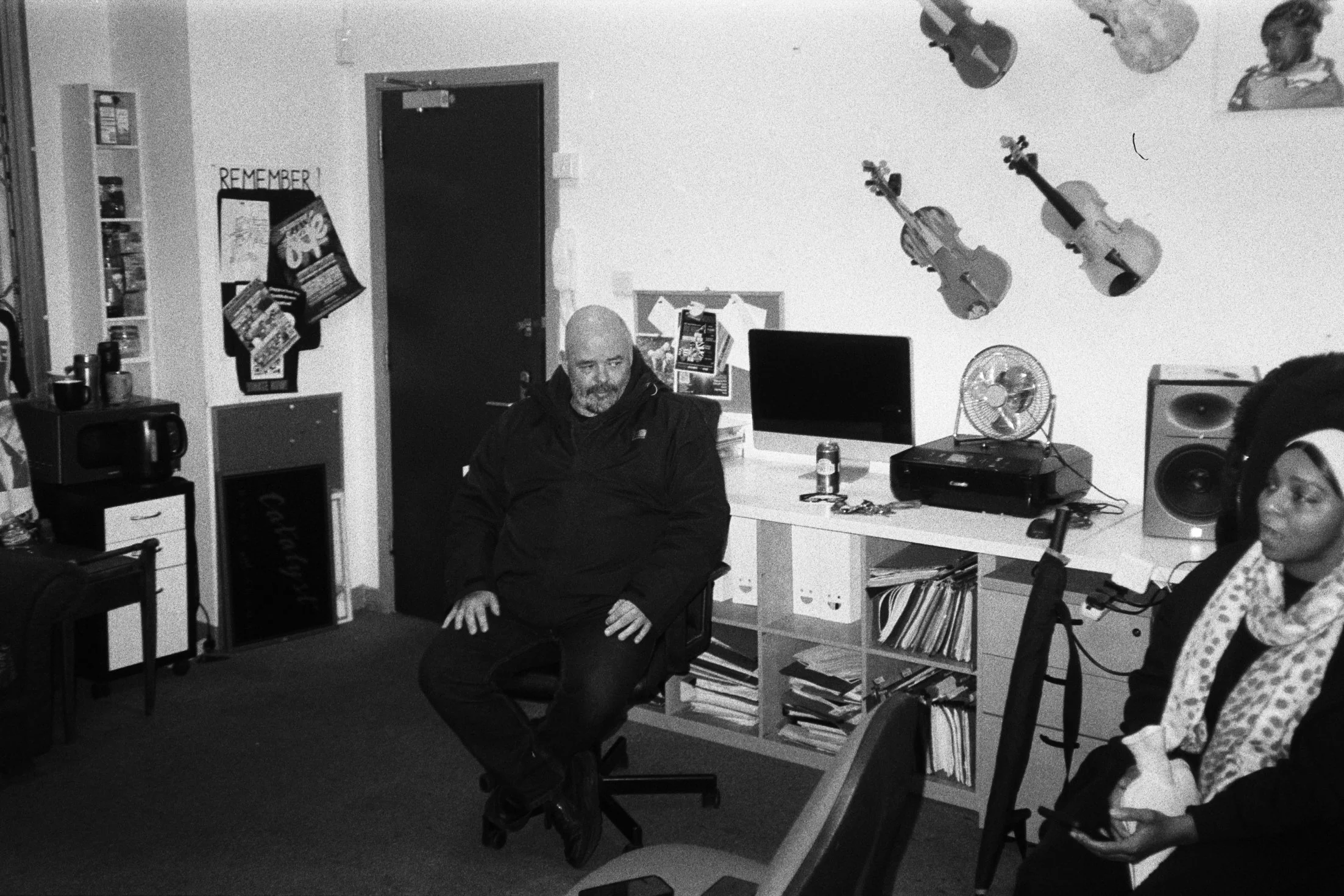
Mid-conversation during the interview with Liverpool Hip-Hop Fest founders Nikki Blaze and Tony Broke. Photographed by Oscar H. Photos.
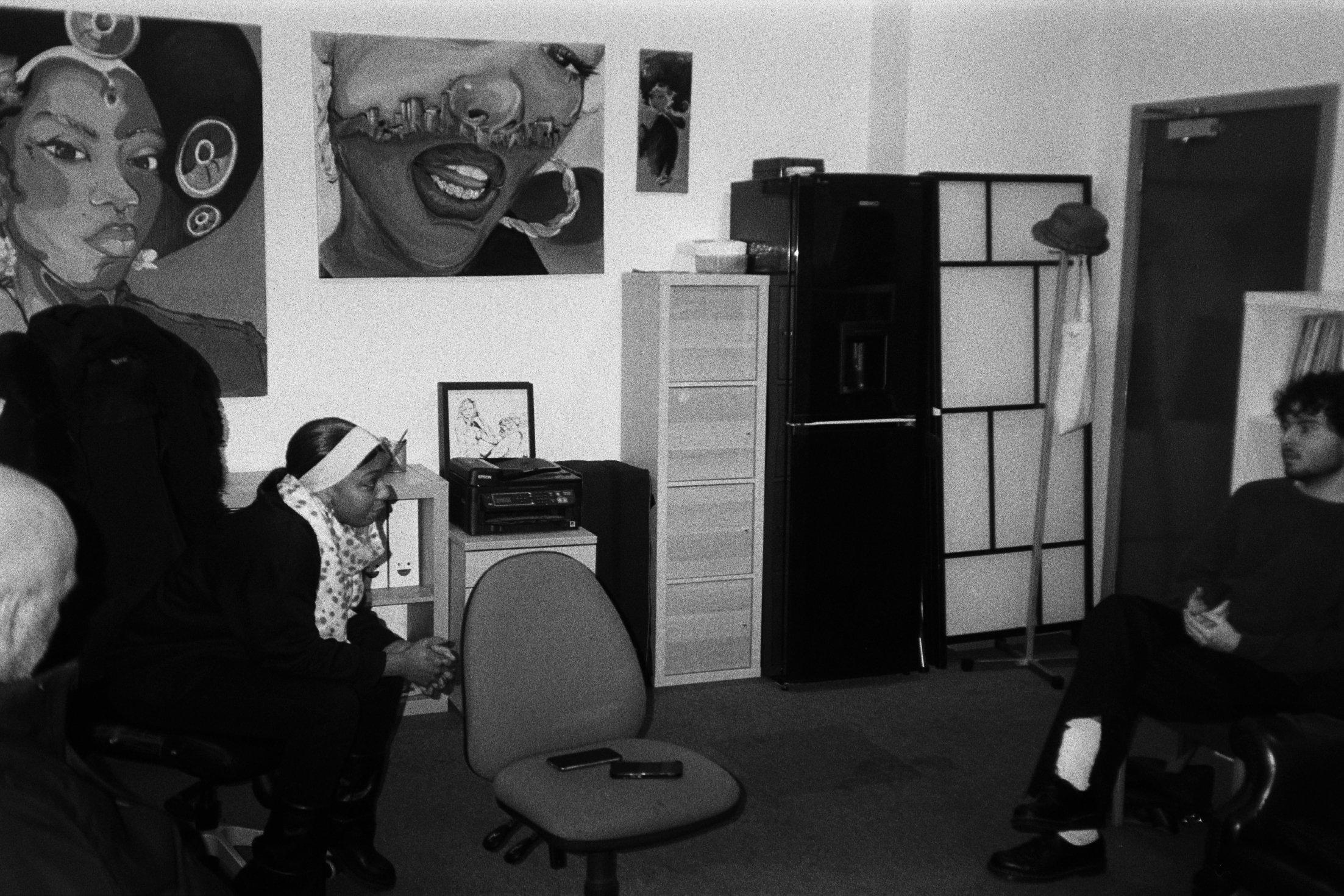
Journalist Will Monham interviewing Nikki Blaze with Hazy Magazine at Toxteth TV. Photographed by Oscar H. Photos.
WILL: What triggered the decision to pass your knowledge to the next generation?
NIKKI: “To be honest, we’ve done workshops for a very long time, even when we were younger.We must have taught about two - possibly three - generations that have now got their own kids. We’ve had ten year old kids in the club, and their parents have let us host them, because they knew they were good rappers, and then they’ve ended up on things like Hip Hop Connection when that was out.”
“There’s people that flourish now, like Akala. I remember bringing him to Prince’s Park and there was a festival on and he came with all his boys! Nobody knew who he was back then.
Nikki nodded to Tony: “You brought Killa Kela out too before he was famous.”
“We were also the first to play Wretch 32’s music on radio, when he had a photocopied cover on his mixtape CD! He was just this underground artist at the time, but within a year or two he blew up, and he was so grateful for me being able to play him on BBC.”
“So for me, it’s more those small stories of how people come up that are impactful, rather than people trying to be some big rapper straight away.
“It’s about the people that we have crossed paths with on the journey, and seeing them before they blew up. I mean, that’s a big thing for me. Being able to spot someone and go “wow, they’ve got some talent, them” and then the next minute they blow up. I just think that’s amazing. That’s a gift within itself.”
WILL: It must be so satisfying.
NIKKI: “It is, more than anything.”
TONY: “It wasn’t the case of slowing down and coming to give back. We’re still doing it; I still make music and perform. Even though I’m older now, I’m not at the point where I’m like, ‘I’m going to stop rap now and go and teach loads of kids’ - we’ve done all of that while we’ve been rappers.”
“I had my own business for about six years, and then a lot of the other rappers would start doing rap workshops, and then the nature of the businesses is to undercut, and offer our crafters rap workshop leaders.”
“A lot of them cheapened it, because they didn’t know the value of a rap workshop leader. So what you got was schools being able to say, ‘well, we only got this much an hour’, and people agreeing to it, whereas I knew the value of the session and what we would do, and what you could get out of it.”
“So I had to walk away from it. I had to get some stability, so I ended up teaching music tech in the school.”
“In the school, we have kinaesthetic learners who like to see visuals; the whole corridor is full of hip-hop, women in hip-hop, Liverpool hip-hop, a whole timeline of London rap, Manchester, Sheffield, showing the kids where grime comes in, and then how UK rap has come back after grime as well.It’s education by pictures and I think that’s important, especially with some of the kids that I work with. I’m lucky to be able to still promote hip-hop in the school.”
Nikki went on to explain another significant project the pair had worked on to educate people on Liverpool’s hip-hop history.
NIKKI: “We also made a banner showcasing Liverpool’s timeline of hip hop, from when it started right the way up to the year 2023 when we released it.”
“It’s been in galleries, it’s been in the Museum of Liverpool. No one has done that before - people have attempted to do their versions but we really wanted to get everyone that was credible and people who had made an impact on the city, because we feel that sometimes people get forgotten very easily and they’ve done some incredible work.”
“What sparked this idea was an event in 1984, at this building called Jamaica House round the corner from here.”
“Jamaica House was where a lot of people would stop off when they came to Liverpool if they were coming to play in the band or see what the club scene was like in Toxteth. There are even rumours that Madonna stayed there, and her signatures were in the check-in book there.”
“In 1984, a breakdancing crew called the Eastwood Rockers posed for a photo for the Liverpool ECHO outside Jamaica House. The picture then got resurfaced years later. Me and TL had been chilling somewhere and we’d been watching a lot of hip-hop documentaries, but they were ones that were about New York and how hip-hop came about in New York and in the Bronx and whatnot - but then in the documentaries they included this photo, taken round the corner at Jamaica House saying it was in the Bronx.”
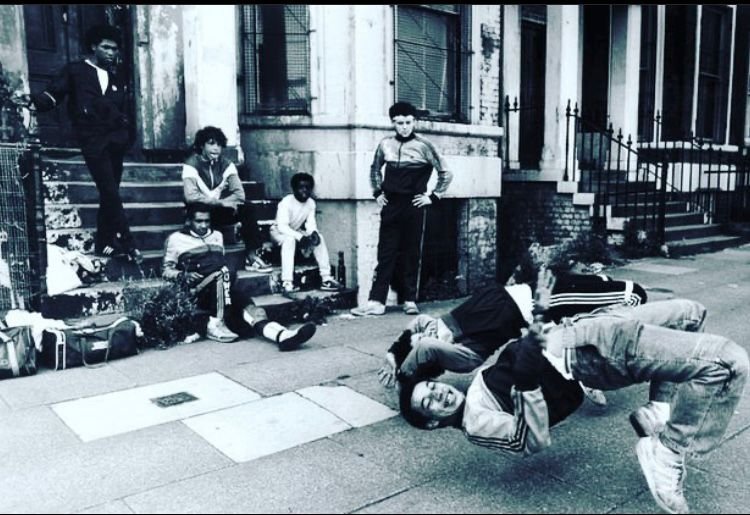
The photograph of the Eastwood Rockers, taken outside Jamaica House in Toxteth, mistaken to be photographed in the Bronx, New York.
“It did look like it was in the Bronx, but we knew the people in the picture, so we knew it wasn’t the Bronx! So this really bugged me, didn’t it? I was like, “nah, this is disgusting!” So I ended up putting the photo on Twitter saying “just to make it clear to anyone who’s seen this picture, this is talk stuff, this is not the Bronx.” This went on for about two days. After it went on Twitter, it had gone viral. Funnily enough, it was Elon Musk that had reshared it because of his ties with Liverpool. It blew up! There were people all around the world talking about hip-hop. There were breakers going, “yeah, I remember back then in 1984”, so it was really cool.”
“That gave us some weight to go run with it and show people that we do have a history of hip-hop here in Liverpool. For example, I think it was 1979 when Sugar Hill first came to Liverpool, which was right around the time hip-hop had just begun, seeing it live on our own doorstep.”
HAZY: The connection between the US artists and the local Liverpool artists was evident at the recent Liverpool Hip-Hop Fest event. Why is it important to have that bridge between the artists who were there in the early days of hip-hop, and the new artists continuing hip-hop’s legacy?
NIKKI: “Hip-hop ethics is the beginning, you know, the skills that you have, what skills you can bring to the table and knowing yourself, knowing the environment around you, respecting one another, and also being able to have a good time, and educate each other as well.”
Nikki then went on to further explain why losing the ethics of hip-hop had perhaps changed the way people expressed themselves through the genre:
“We’ve kind of gone through a time where a lot of hip-hop has lost its way; women half naked - that was never hip-hop. There was always people rapping about drugs and stuff like that, but talking about them in a way that is derogatory, saying “it’s okay for me to sell drugs to a kid, and the kid dies or whatever.” Talking about it in that sense isn’t hip-hop.”
Nikki believes the ethics of hip-hop aligned more with “creating an awareness about what goes on and political situations, and asking “how can we stop this?”
“How can we prevent these things from happening? We want to pass those ethics on, because if we don’t, it just loses its way.”
Upon reflecting on how older hip-hop artists could pass on their ethics to the next generation, Tony explained the connection between the US and Liverpool, not just at the recent Liverpool Hip-Hop Fest event, but throughout hip-hop’s timeline. He emphasised the importance of community building, and creating bridges for connection across countries and generations in hip-hop.
Tony reminisced on when there were several hip-hop events across the city: “You had events at Otterspool Prom, you had the Hook Festival - it was great. Sadly, the council pulled the money from it and put it elsewhere.”
“The graffiti culture was amazing too - people were spray painting as you walked in. You had all the dance battles going on. I had control over the rap ciphers. Ras was doing a scratch showcase, and we had an evening event which was in the sports bar, so after the daytime part, we’d have another section of the night in the sports bar where people could drink and battle.”
“There was also a lot of B-Boy culture, which brought loads of people from London, Hull, Manchester Liverpool, all coming to our city and celebrating the culture - it lasted about five years. Even when the money went, it didn’t fizzle out - crews still did their thing, but everyone just got older, and got jobs, and had kids. So, again, it’s time for the next generation of B-Boys and B-Girls to go and do workshops with the kids to keep the culture going!”
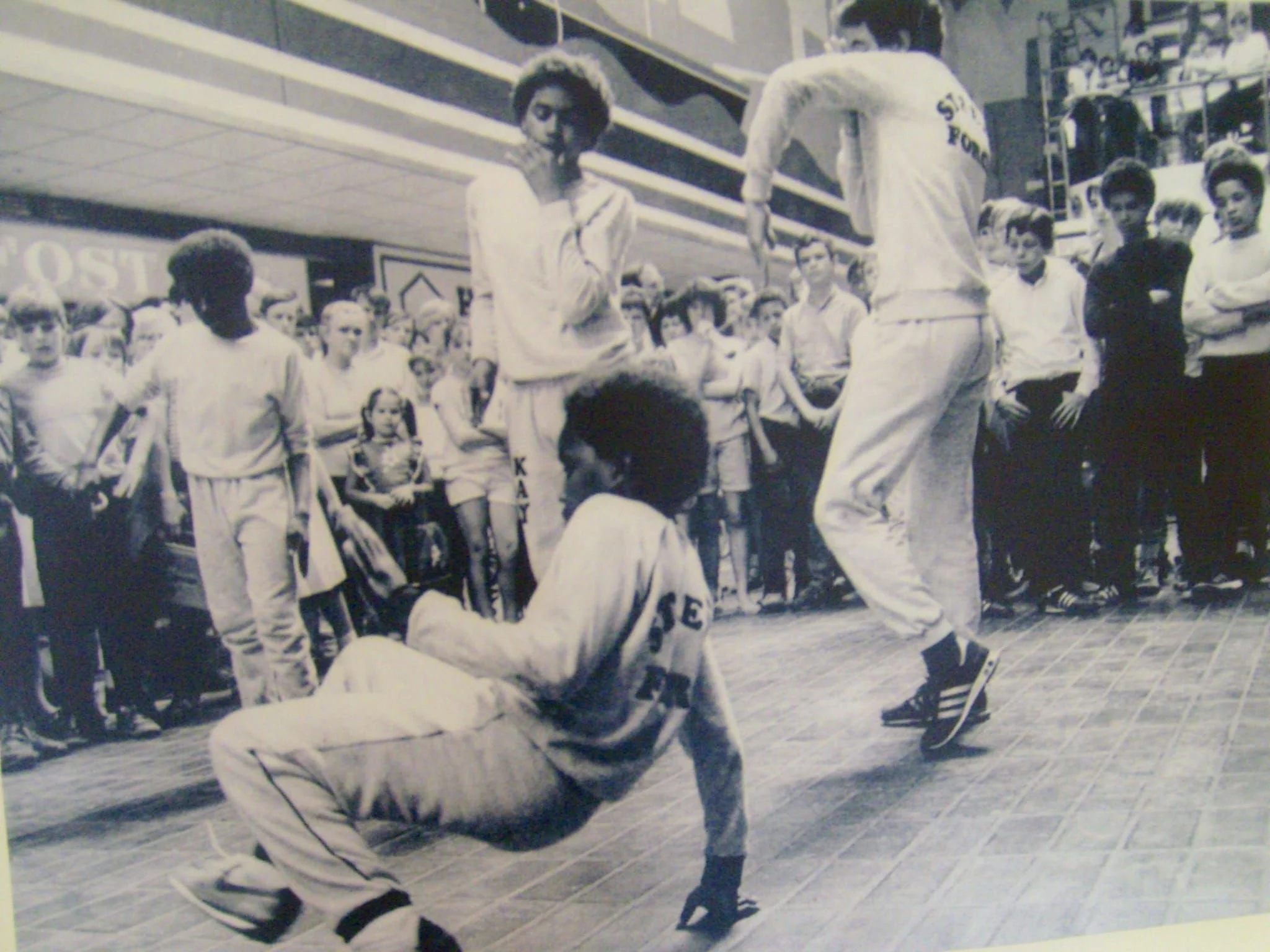
B-Boy Culture brought crews together from cities across the North to perform in cities such as Liverpool.
Rap as a genre within Liverpool covers very broad variety of musical styles. On the one hand, there are rappers that align more with Nikki and Tony’s style of hip-hop, showcasing more of an underground boom-bap sound such as Nattyhead, Prefects and Dr Lekta - however on the other hand, there are those who have developed a new sound of Scouse Rap, including Esdeekid, Mazza, and even those who have taken on the path of grime and conscious rap into their sound, such as Kasst 8 and KOJ.
While speaking about rap in Liverpool, and how this was becoming a well-known genre across the globe, we then spoke about different branches of hip-hop emerging across the world, and its impact on the overall genre and live music industry:
HAZY: I think the industry is declining a little bit with live events. Live events have suffered a lot in the past few years. It’s a combination of factors - the economy and COVID was a big factor. Can hip-hop continue in the same way as social media and digital technology grows?
NIKKI: “I’m a big believer in things being recycled, it used to be like every ten years something could happen, so when UK hip-hop was really big around that time, that was only because they were bringing back old school hip-hop again, like 10, 20 years later again. So I do believe culture will change. Have you ever seen the film Twelve Monkeys?”
HAZY: No, I haven’t. No.
NIKKI: “So it’s about a bunch of kids that are against the system, against technology - everything that’s going on. They’re against everything - and we have that in the world. So I believe that there will be a group the people that are like, ‘no, we don’t do social media, if we use technology, we use it for our benefit or we use it for good.’ I do believe that that will also happen with hip-hop as well.”
HAZY: I guess on the one hand, social media does help exposure to different audiences. But then again, it can also be quite saturated sometimes as a platform.
TONY: “Sometimes there’s too many artists all trying to do similar things in similar lanes, and it can be an overkill of similar stuff, but I think from my experience of freedom and the lucky opportunities we got was that we didn’t wait on a record label’.
“I think of young kids in groups who are just like getting their clique together, getting their mates, setting up their own labels, building up their own night, and that’ll happen in pockets, it’ll come back in cycles, but it be in pockets.”
“It’s always about passion. I’ve never been about trying to get rich or get famous or whatever. I’m about just good music and hip hop. And if something happens from it? Sound. If it doesn’t, I’ve had a great experience with it, do you know I mean?”
Will: Have you?
Tony laughs: “I’ve been everywhere, mate! I’ve travelled a world. I’ve MCed for Cool Herc - I got bigged up when I started!”
We were taken aback by this - to be bigged up by the founder of hip hop is a massive deal.
“He turned around and said, “who’s that guy, Tony?”. Someone needs to deal with him.”
“Cool Herc said he was trying to get me a deal in America, but obviously time is everything. And I wasn’t ready anyway, but just to get that blessing off someone who started it.We’d been on stage with KRS-One, who came to Liverpool.”
“That’s one of my idols. I bought BDP vinyls when I was a kid. I’ve been on stage with one of the artists who got me into rapping. I’ve also met one of my other favourites, R.A. the Rugged Man, and I actually beatboxed for him while drunk.”
“I’ve also beatboxed for Fat Lip from Pharcide. He returned the favour; he beatboxed for me. So I’ve had some mad moments. I’ve got loads of like, “wow” memories.”
HAZY: But that’s the power of the genre, isn’t it? In how it can bring people together, across countries.
Tony nods: “Well, Nikki’s done a song with Jadakiss. That’s massive.”
Nikki continues: “And we’ve both performed in New York as well. I’ve performed twice.New Blue. New Blue, in Manhattan, or downtown Brooklyn.”
Tony adds: “By the time I got there, the time ran out. So when I explained to Ray Angry - who’s part of The Roots and Black Thought, and he went, “you from England?”’
And he said to the DJ, “put a beat up”’
Nikki nods: “We think there was a cultural thing; it was mainly a black club. In a lot of black culture, they don’t expect that he’s going to be a rapper either.”
Tony looks at Nikki in agreement: “They look at me and think I’m security or something, I don’t look like I’m gonna be rapping, but when I get on, I shock them. I was buzzing because the crowd responded, you could hear it on the video. We were all saying ‘bars, bars!’”
“But there’s still one thing that’s niggling me, and I need to go: the Union Square, where you have the Decypher. I need to go and do that, to say “I’ve done that” and then relax.”
As our conversation continued, Will found himself taking the occasional scan of the room, noticing a particular interest in the various artwork on the walls. All, we are told, were created by Nikki Blaze.
WILL: You can see it in this office, you’ve created art from such a wide range of disciplines. What is it that keeps the creative energy alive?
“That’s a strange thing really”, answers Nikki, “because I’m from a family of art teachers. It started with my nan; she was John Lennon’s art teacher! I was made to draw a lot as a child, and do a lot of art.”
“I told my mum I was going to be a rapper, and she almost had a heart attack and fell off her seat! But she was happy I did that in the end, because I got to travel the world. When she passed, I had something telling me, it was like a voice was saying: ‘what are you doing with your art? You’re not doing anything.’ And then funnily enough, when she passed, I got opportunity to do Comic Con York! Lucy Liu came and looked at the work, which was amazing. It’s hard to say, but I was meant to do it.”
After our earlier tour of the Toxteth TV building, we were eager to find out the makings of a day at headquarters.
Tony tells us: “Well, twice a week, maybe more than that, we have the Pilot group - we have members of the Pilot group. We’re working on a project at the moment, called A Step Up project, and it’s a collaboration between Liverpool Hip Hop Festival, Amplify and YouTube London and also Positive Impact.”
“Our plan is to have an EP or an album or an 8-track project complete and put out on Spotify with local artists, but then also have a performance in the Africa Oye Festival this year.”
“A day in Toxteth TV would be from five o’clock till about half nine in the evening; we’ve got people in the DJ room, we’ve got people in the band room, we’ve got got people in the studio. We’ve got people sitting in there talking to us about life, people sitting out there, writing lyrics, all working towards one goal; to get songs or the tracks completed, so they can perform them.”
NIKKI: “A lot of them have been what we were when we were younger; bedroom artists or bedroom DJs, and it’s like trying to find a tribe. It’s not like if you’re living in the middle of New York or London where there’s creators all around you.”
“There’s a lot of creators in Liverpool, but a lot of people can be quite isolated, and that’s another reason why we have this place as well, because we’ve been those kids. We find at this place is a safe haven for a lot of young musicians.”
TONY: “We’re just mentors; we’ll give them feedback and give them little tips about what they can approve on, but for me, it’s a very personal thing. It’s about writing your bars, and it’s good to have some constructive feedback.”
NIKKI: “It’s also about guidance as well - when we were younger, especially me being a woman - you’d have loads of guys going, “yeah, come to my studio in my house”, and that’s not always a safe situation. So we wanted to make sure we can look at that stuff and go, “okay, well, maybe or if they’ve got an audition, maybe one of us go with you just to make sure it’s safe”, or “instead of going to that guy’s house, come to this studio instead where we’ll be safe”. It’s also how people get groomed. A guy could never do that with me, but they’ve tried to.”
“We want to make sure there’s a place where they can do the music safely. The other thing that happens with people is if you’re a musical person, but your parents maybe weren’t, they might think by encouraging them to just ‘go, go go, go out there and do it’, they think they’re doing a great thing, but they don’t realise there’s a lot of dangerous stuff that’s underlined in the music industry.”
“We try to sit down and have conversations with people - not to tell them that their parents are wrong - but just say: ‘you’ve got to make sure your parents have an understanding of the type of industry you’re going into as well.”
“We could go on forever!” They laughed.
TONY: “We’re still hip-hop, we’re still living and breathing it. We’re still coming out with it, and performing and just keeping going until we can’t really, and pass it on to the next.”
Nikki laughed, “and then we have no voice anymore!”
HAZY: Thank you so much! We’re looking forward to seeing the progress of it.
The pair smiled back at us: “Appreciate it. Shout out to Hazy Magazine!”
You can keep up to date with Liverpool Hip Hop Fest, Nikki Blaze & Tony Broke through the links below: