
“WE’RE SEEING A MASSIVE RETURN TO ANALOGUE ART”- AN INTERVIEW WITH KATE PARTINGTON
WRITTEN BY WILL MONHAM
When it comes to creating new artwork, the line between physical media and the current digitised landscape - once tools to expand on original work, now awash with A.I generated ‘slop’ - has become a line ever-harder to tread.
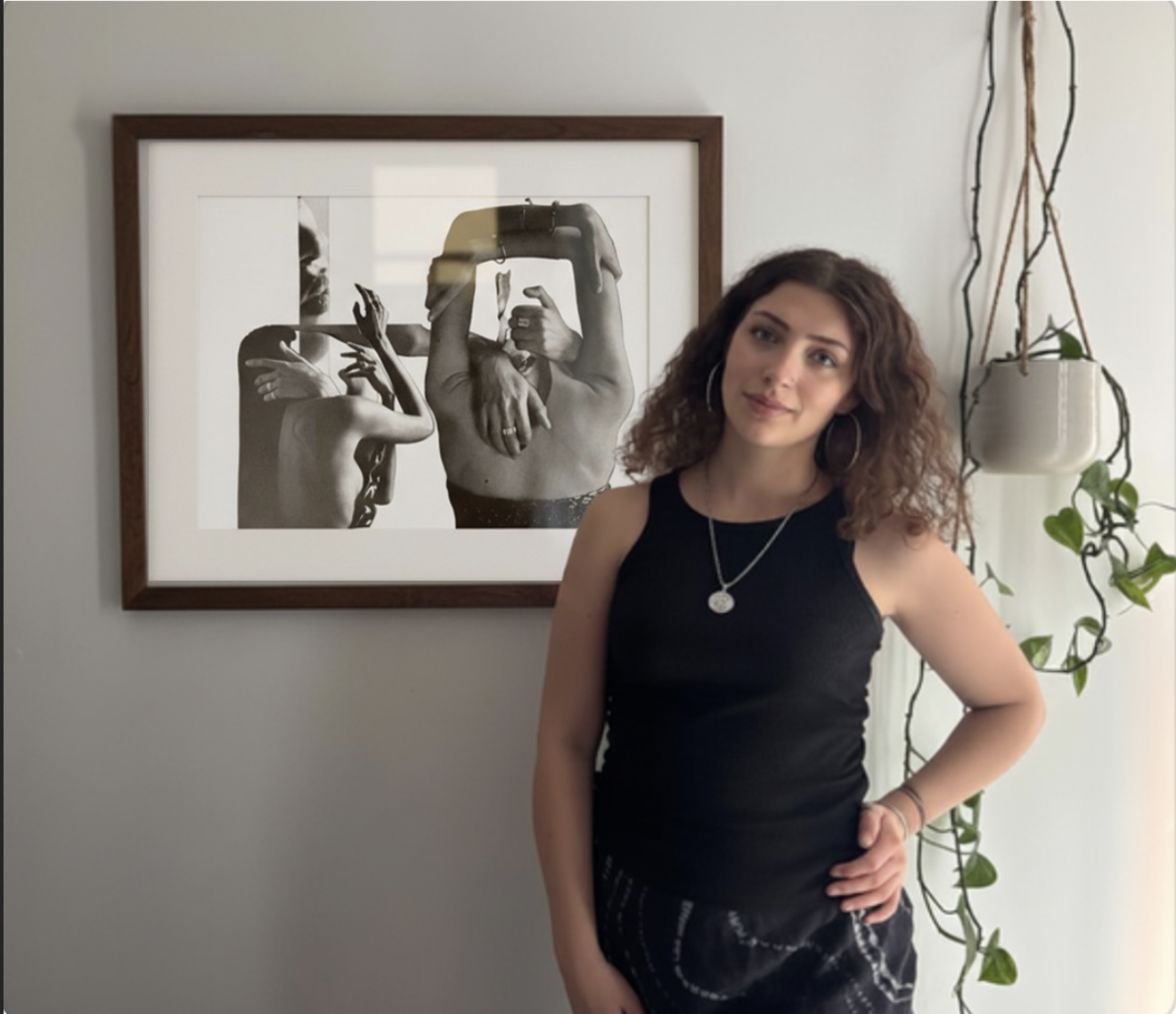
Recently, Hazy had the opportunity to speak to Manchester-based mixed-media artist Kate Partington about her art, and her feelings around the ever-changing creative landscape. Kate works primarily with collage, and blends both physical and digital forms to create some truly striking images.
WILL: Thanks for speaking to Hazy, Kate. Describe your work for a first-time reader
KATE: ‘A lot of my practice revolves around collage; whether that be paper, hand-cut collage, collage in terms of video formats or different media, but that as an entire art form is something that I’m very concerned with.’
‘A lot of my work focuses on ideas of human connection. I’m really interested in trying to explore those feelings we all have, and those places that we all go to - maybe in our dreams, or in our subconscious - that we can’t quite put into words. We all feel them, but we can’t quite get it out sometimes. So I’m very interested in that sort of area and looking into that.’
WILL: How did you land on collage, as the best way to represent those ideas?
KATE: ‘It was a mix of sort of trial and error; so in uni I was probably a bit more concerned with digital and film stuff. I think that probably was just because it was COVID, so everyone was quite digital at the time.’
‘And then I got into sort of ideas of digital collage, and making these little collage characters in animated shorts, and then I was thinking I’d like to use this medium to explore more.’
‘I often think collage is something that can be thought of as mainly preliminary work rather than a final outcome.’
‘I mean, at the minute we’re seeing a really cool boom in collage. It’s coming up as an art form at the minute and people are thinking about it quite seriously, which is really exciting. But often it’s been as preliminary work or maybe side work - you do a collage to then get to the final piece.’
‘And I’m quite interested in that early freedom that you can get with collage, and the way that it is, by nature, something that is a little bit childlike, which I really like.’
‘Cutting things up, sticking them down, something we all used to do in school. You’re able to sort of shape the work physically as you go along, just by the nature of it.’
WILL: So, as you’re growing up, before you can put your finger on certain feelings or sensations when you were a child - you’re reflecting that idea in your work. Is art something you’ve always been interested in? Did you have influences growing up?
KATE: ‘Yeah, loved it. I’ve always loved it. I think every kid is quite creative and has a lot of fun with it. And it’s just been something that I’ve naturally always loved & known that I’d want to get into.’
‘I wouldn’t say childhood necessarily draws that much of a place of inspiration for me, I’m just really interested in how kids’ brains work with arts and crafts, because they’ve got no idea of like the rules or the technicalities.’
‘And sometimes you see a video of a kid making something, and it’s like the best piece of abstract art you’ve seen in the last five years - but it is a four-year-old that’s made it!’
‘I think you get a lot of that weird exploration of that age.’
Upon looking at her work, it becomes clear Kate Partington’s work bridges the gap between physical and digital form & the freedom these tools provide reflects the childlike sensibilities she looks to portray.
I found the layered approach to her pieces particularly striking as I had a look at her portfolio before our chat. As such, I am keen to find out the motivation behind bringing these ideas to life.
KATE: ‘I don’t know exactly what it is that compels me to do it, but I just feel very compelled by it. I’m not entirely sure. I think the idea of connection is one that I think everyone’s concerned with.’
‘I think growing up in the digital age makes that feel more important as well; we’re technically more connected than ever, but there is this sort of electronic distance that stops you getting that real connection sometimes. Maybe that is probably a factor of why I’m so concerned with connection and human bonds.’
‘And I think that also influences these ideas of non-physical spaces that I’m interested in. I think now we’re all really familiar with the idea of a non-physical space because of the internet - and these digital spaces that we all occupy and spend time in.’
‘Whereas before social media was so huge, these ideas of a non-physical space were slightly stranger, and represented in a much more abstract way, and now they’re kind of represented in the metaverse, which is interesting to think about.’
WILL: Describe for me the process, from concept to finish product.
KATE: ‘I like to come up with some vague loose ideas, and an overall focus or a theme. I’ve done this series called Desire Me, which is all focussed on human connection of feelings; those feelings that you get right at the beginning of a relationship, and you’re both feeling them - there’s a hundred songs about it, a hundred movies about it - but those feelings.’
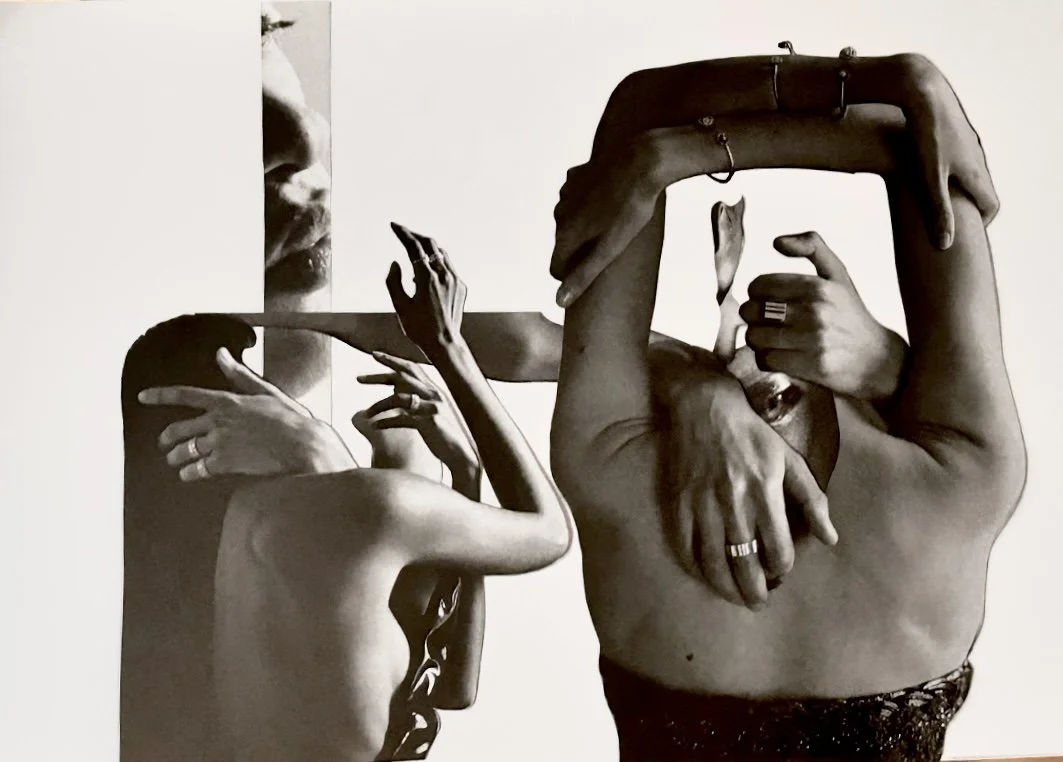
So I’ll go in with an idea of what I want to represent, and then I’ll have some sort of vague idea of like, “okay, I want to have this idea of reaching out, be visible”, so then I’ll maybe chop out a bunch of hands, et cetera, try and play around with it.
Kate turns her screen towards a stack of magazines squeezed into a shelf behind her.
KATE: ‘I don’t know if you can see, but I’ve got a stupid of amount of little magazines.’
‘So I’ll flick through, try and find some figures, forms, limbs, whatever, that have a shape or a structure that I like and then it’s quite experimental from there where I’ll sort of play around with how they all work together.’
‘Ideally, it’s great to get an outcome straight away just from the collage. But if I’ve got, say, an arm that I really want to use in a piece that’s mini and it doesn’t fit, what I’ll then do is I’ll scan a lot of my elements in digitally, and then I can play with scale. It gives me a bit more freedom.’
‘It does feel like cheating. I don’t know why, but it does.’
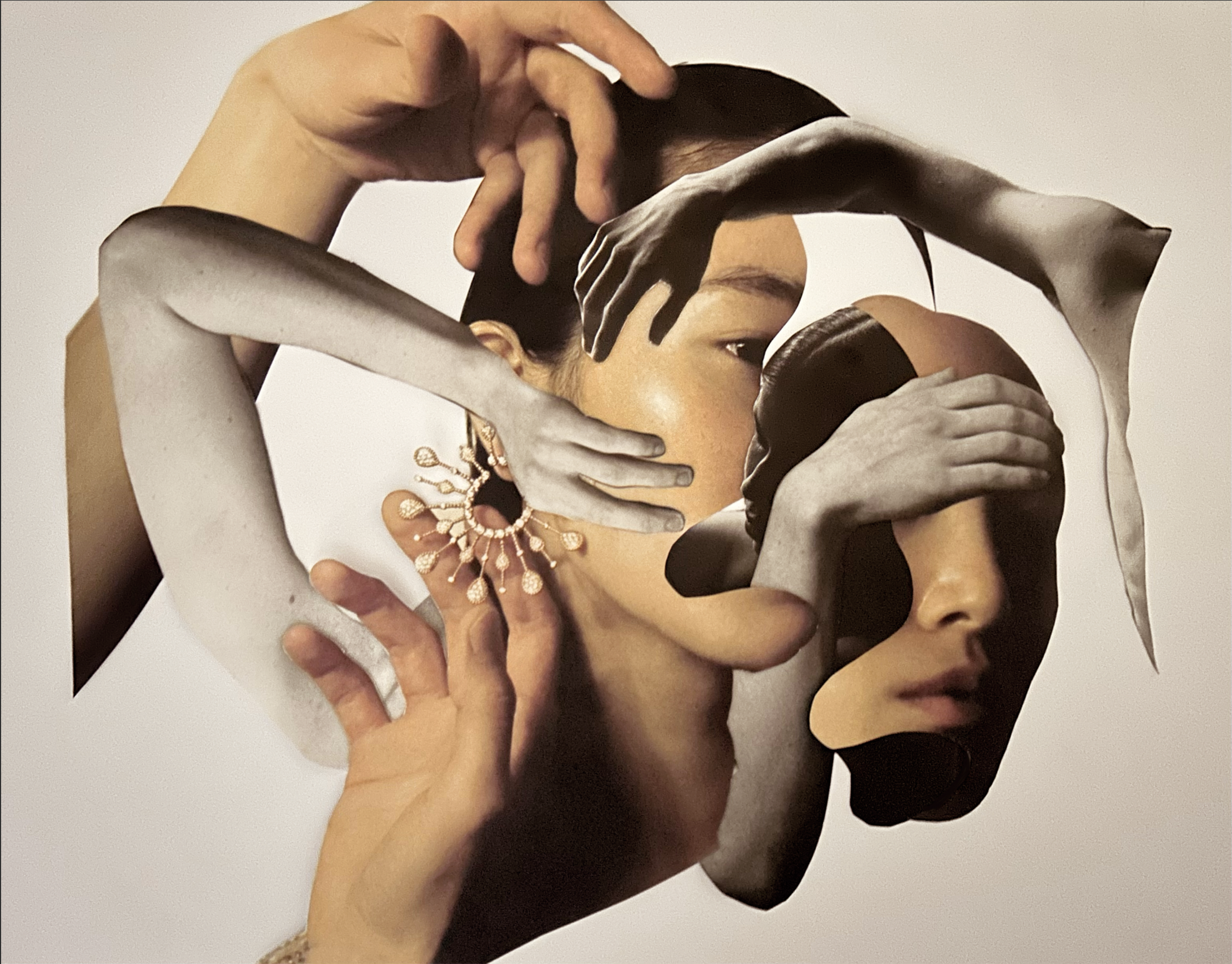
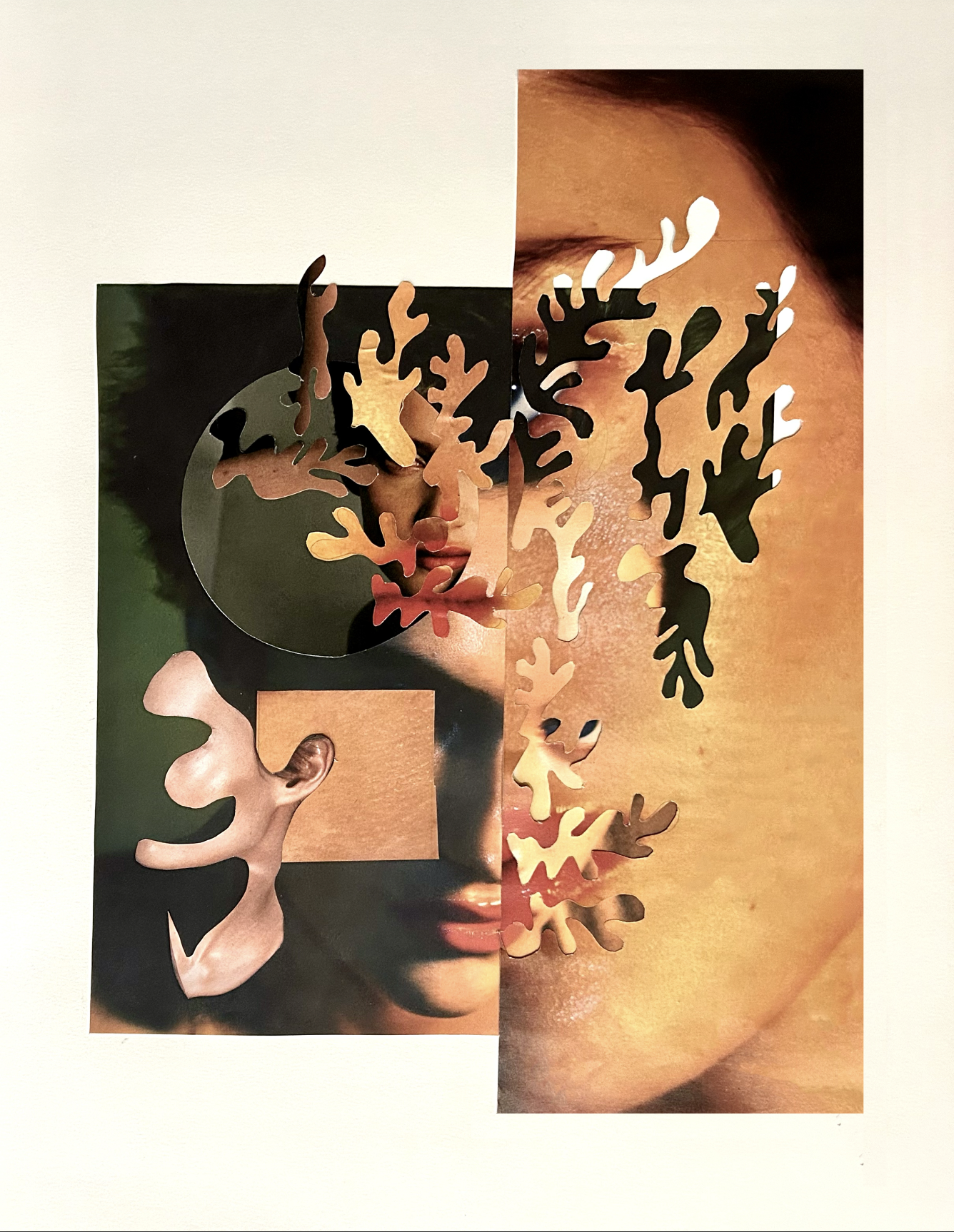
Works from Kate Partington’s project Desire Me, focussing on representing human connection and feelings through collage.
WILL: If you have the tools at your disposal - and it’s obviously contributing to the process.
Now, I’m assuming it varies piece to piece, but in terms of time scale, what would we be talking?
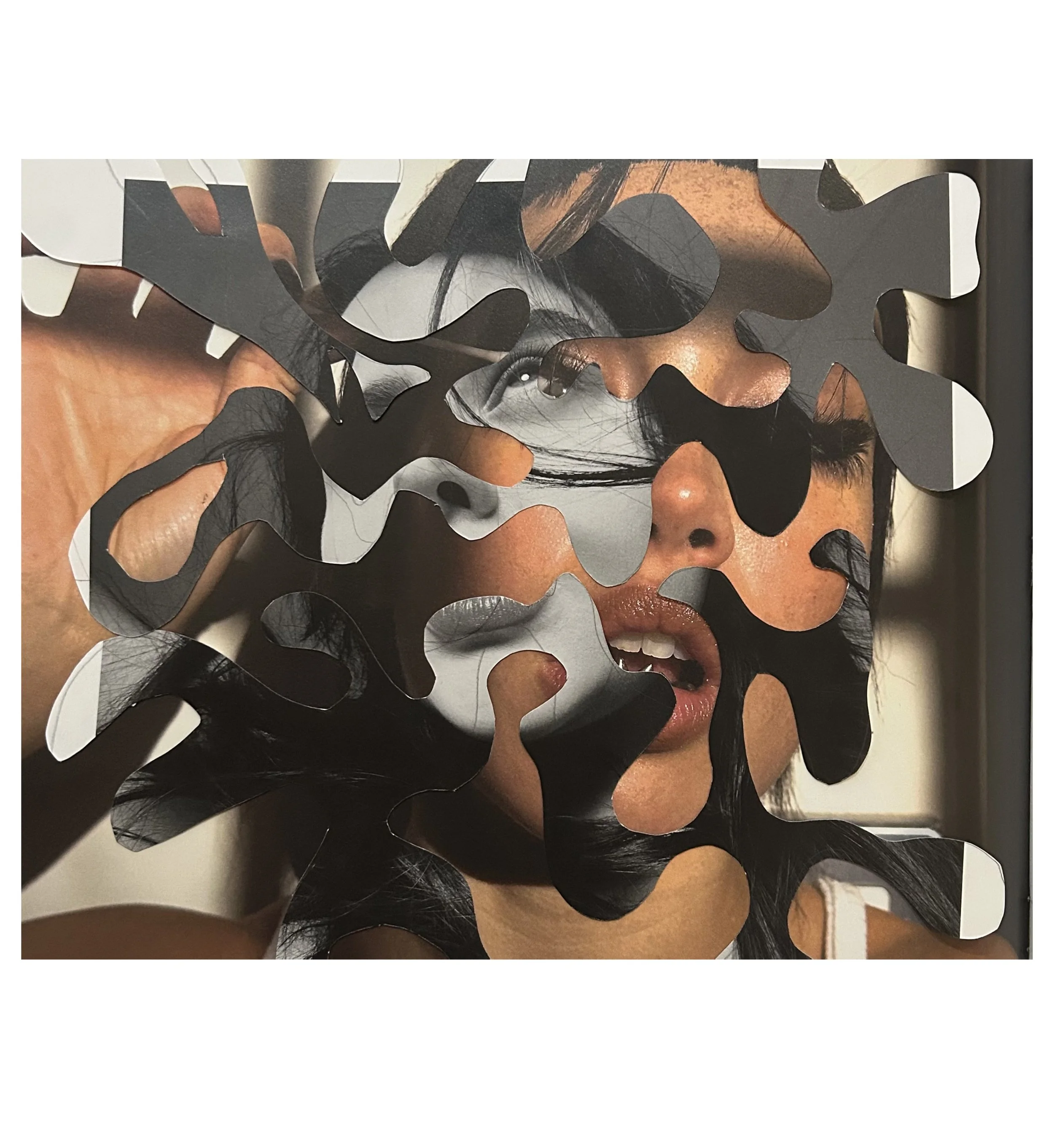
KATE: ‘Usually anywhere between like one to six to eight hours per piece. So it really depends. Sometimes I do this combined portrait thing which is often a lot more fiddly. It’s lots of little swirly-wirly cutouts. So that takes a fair few more hours than if I’m cutting up big arms and things like that.’
WILL: Do you ever find that sort of art is losing some of the tangible creative process that you’ve described? Or do you think people are sort of starting to come back to it?
KATE: ‘What we’re seeing is obviously a huge rise in people who, let’s be honest, are not artists - just generating prompts from a machine, which has learned everything from existing artists.’
‘It’s such a weird thing - the cat is out of the bag, now’.
‘What it pumps out often does look like other people’s work, or an artist will create something, and every one of their comments will go “AI slop, AI slop”.
‘No, the “slop” was trained on them! They were there, pre-slop. They did that!’
‘We’re seeing a massive return to analogue art and analogue media, because it is so difficult to differentiate (human and AI art).’
‘And then you also have the whole idea where it’s like; are we as artists being scared of technological innovation? You saw this happen with people who were criticising artists like Nan June Pak, when he was doing experimental work with televisions in the ‘60s, but I think this is something newer and scarier. I think because it is trained on theft, that’s where the issue lies.’
‘I also think anyone that uses AI to create art that is meant to be for the public or for consumers - not only do they think that artists aren’t worth paying, it also just thinks that the general public is stupid, and wants slop, but it doesn’t. It actually doesn’t.’
‘People genuinely appreciate a nice looking thing, or a well-made thing. I think when you just offer people generative AI, you’re assuming that they’re not capable of understanding anything more complex, which is not very nice.’
‘It’s just the ultimate form of like can’t be bothered, isn’t it? Can’t be bothered to spend two minutes at work finding a local artist to reach out to, who would be absolutely thrilled. Let’s just whack in a prompt’
‘How much more convenient do we need everything to be?’
‘I think that we’re seeing pretty much every creative reject it. Anyone who’s a fan of the arts is already pretty much rejecting it.’
‘I think most people generally are not wanting the things they like to be generated by corporations. You know, it doesn’t really bode well. So I think we will see a swing back.’
‘It’s the people at the top that are in charge of when that happens, because I think everyone under the top is ready for that.’
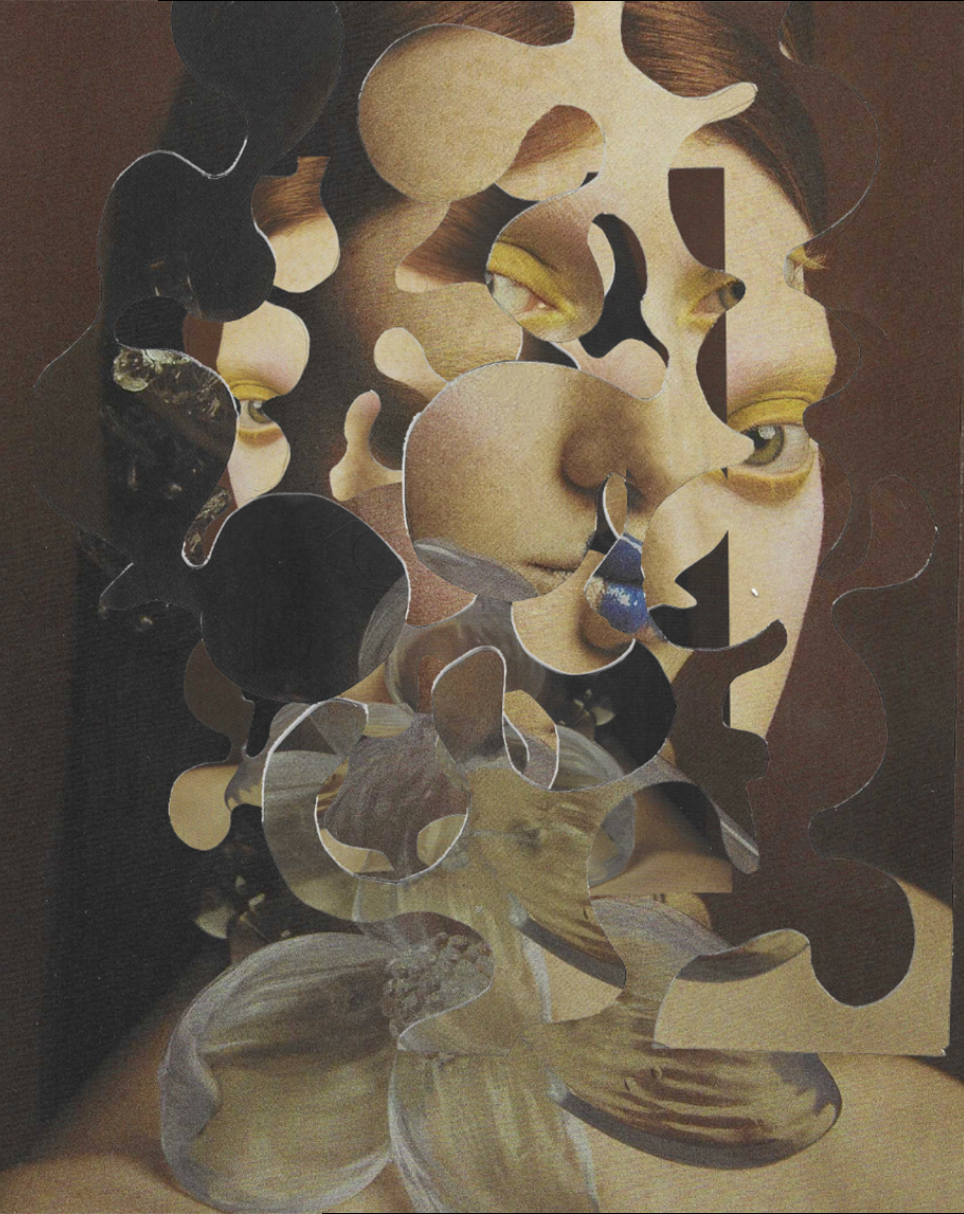
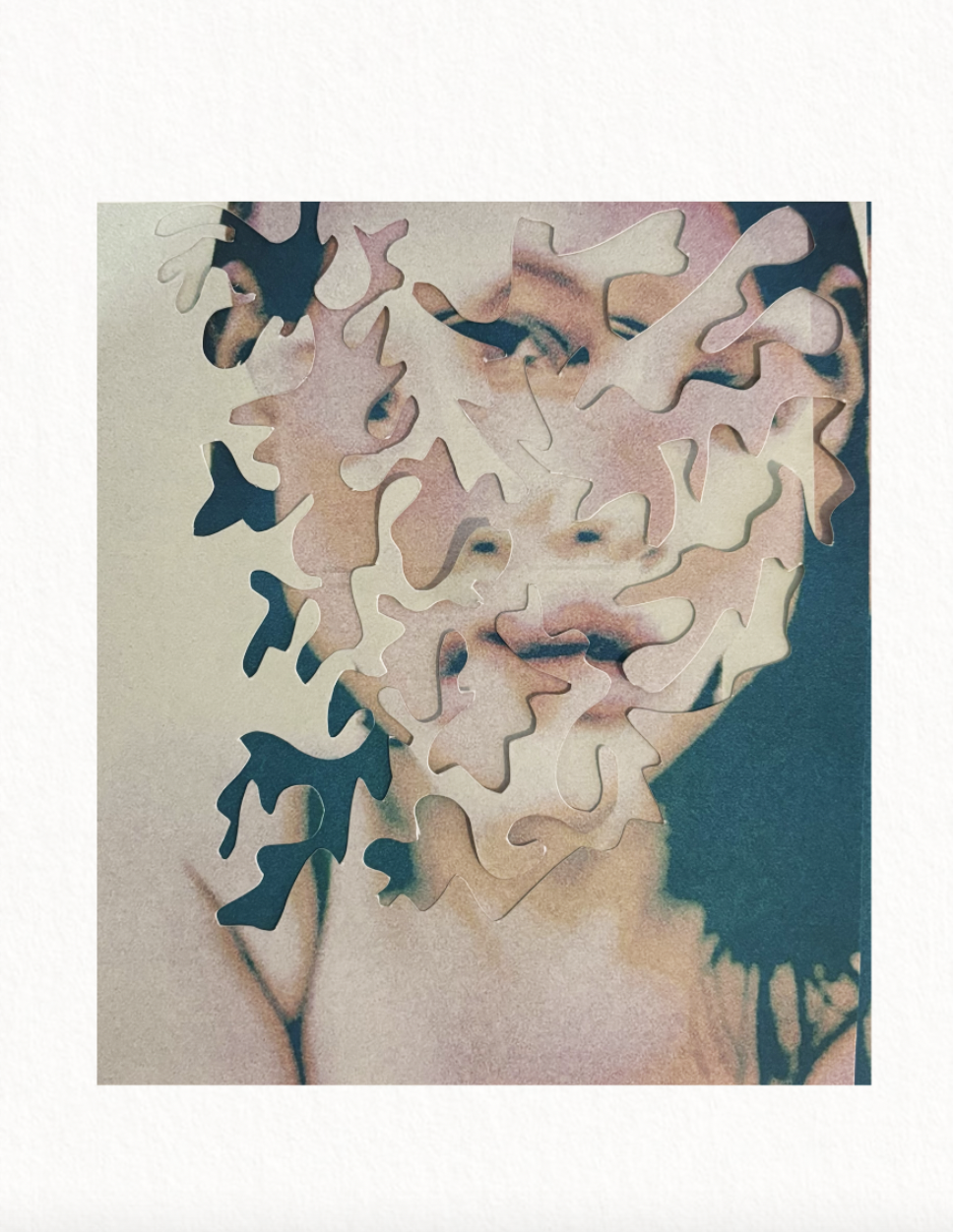
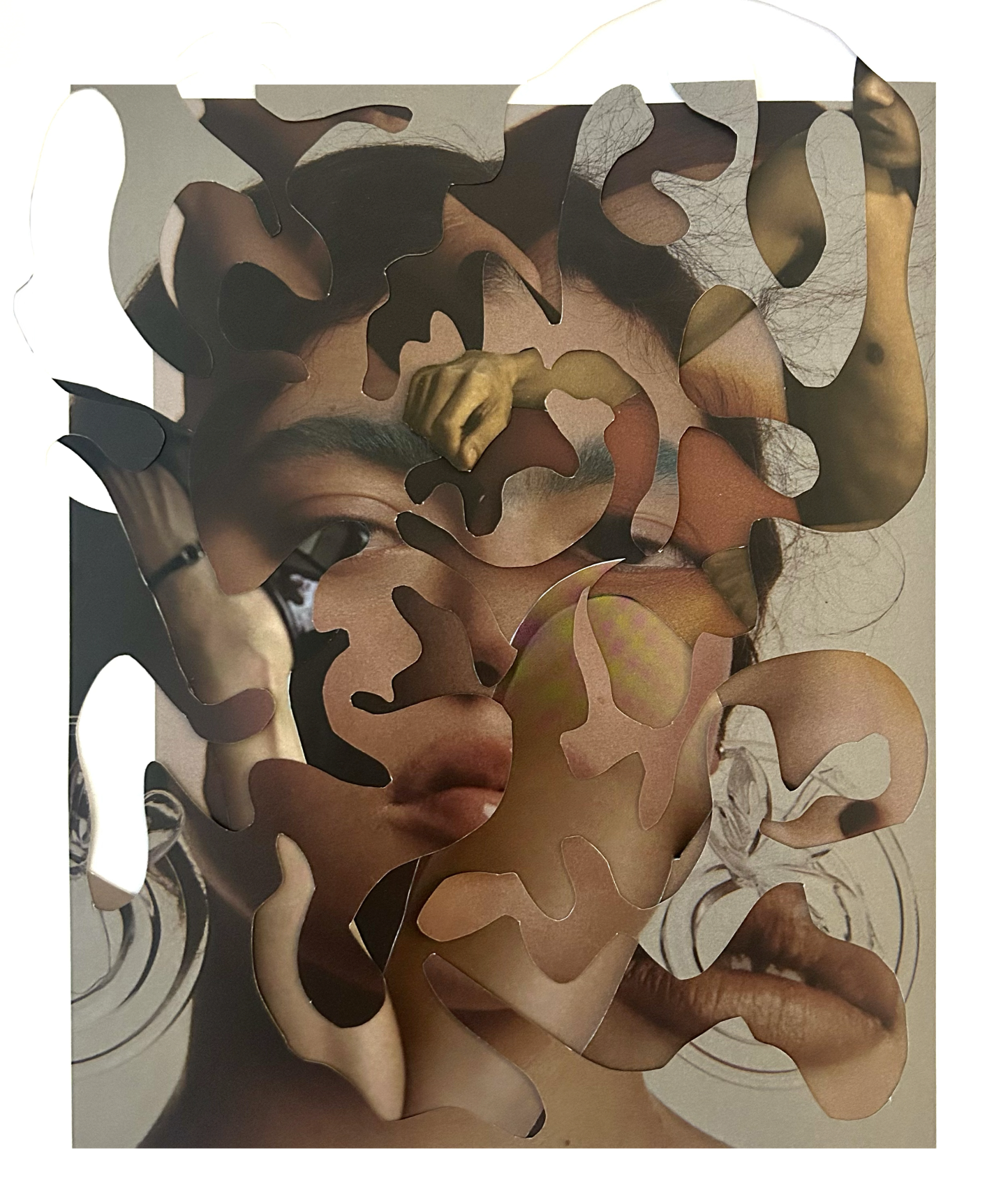
Thank you to Kate Partington for taking the time for this interview. You can keep up to date with Kate’s work through her website and Instagram page: